
Conferences
RAI Amsterdam: ‘Proud of Amsterdam’s sustainability score’
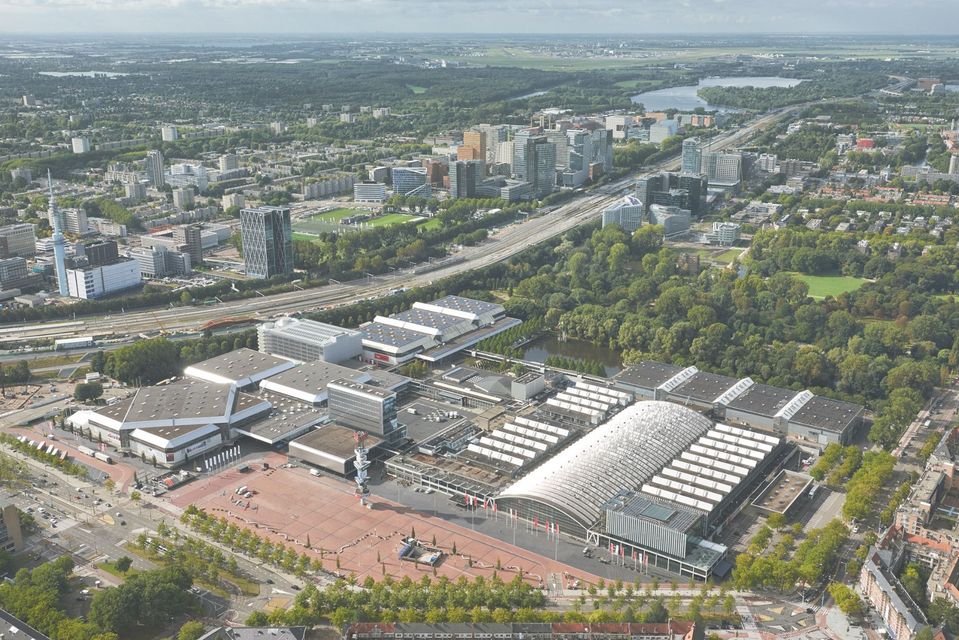
In 2026, Amsterdam climbed ten places in the Global Destination Sustainability Index to 30th place. RAI Amsterdam is proud to be part of this forward-thinking city. ‘At the RAI, too, we work every day to limit our negative impact on the environment and increase our positive impact,’ says COO Maurits van der Sluis.
Amsterdam is a popular events destination. That is down to its excellent conference facilities and the city’s unique atmosphere, but also to the City of Amsterdam’s commitment to creating a healthy and socially inclusive environment. The RAI sees a clear parallel, says COO Maurits van der Sluis. ‘First and foremost, delegates want a meaningful, well-organised congress. Everyone knows RAI Amsterdam as a large, modern and versatile venue; that no longer needs explaining. At the same time, we see environmental and social considerations becoming an increasingly important factor when choosing a congress venue. What the RAI does in this area, often in close cooperation with the city, is less well known.’
Looking beyond CO2
Alongside the building and its surroundings, the events themselves also make a big difference. ‘Of course we work to reduce waste, we plan our menus carefully, we use reusable materials wherever possible and we use energy responsibly,’ says CSR Manager Hanna Rentmeester. ‘That is how we limit our negative impact on the world. But for me, the far more interesting part is that we can also make a positive impact. As a congress venue and as an organiser, we connect people, knowledge and markets. In doing so, we drive innovation and share knowledge that can help solve challenges facing society.’
Carrousel
Reducing energy consumption
Energy will always be a key issue. The less fossil energy used, the better. Innovation usually holds the answer. The RAI buildings are lit mainly by LEDs, and smart meters and motion sensors are used to reduce energy consumption. The venue also makes a point of using non-fossil energy sources. ‘We have 3,970 solar panels on our roofs, we use Dutch wind power and our kitchens are fully electric,’ says Hanna Rentmeester. ‘The RAI’s central cooling and heating systems run on electricity and local district heating, and we use underground thermal energy storage.’
Certifications and partnerships
This commitment to sustainability is underpinned by international certifications and partnerships, including EarthCheck Platinum status, ISO 14001 and ISO 9001 certification, and its status as a signatory to the events industry’s Net Zero Carbon Events Pledge.
Amsterdam in the GDS-Index
Every year, the Global Destination Sustainability Movement publishes the GDS-Index, which scores cities on environmental performance, social performance, supplier performance and destination management.
Amsterdam has made significant progress in recent years:
-
2024: 60th place
-
2025: 40th place
-
2026: 30th place
Locally, the ambitions of the City of Amsterdam and the RAI come together in initiatives such as Zero Waste Zuidas and the Green Deal Zero Emission City Logistics. ‘By working together with partners across the city, you can achieve more,’ says Maurits van der Sluis. ‘For example, by combining deliveries, setting up shared facilities and exchanging expertise and ideas.’ Amsterdam’s excellent public transport network, with RAI Amsterdam right at its heart, is a welcome bonus.
More than a meal
The reputation of the RAI’s executive chef Rientz Mulder has spread far and wide across the events industry. This is due in no small part to his tireless commitment to working with local and seasonal produce as part of the Heartwarming Amsterdam concept. In addition, plant-based options are available as standard, and dishes are prepared on site wherever possible to prevent food waste. Whatever is left over is often given a second life. The RAI donates surplus food to the Food Bank, the Salvation Army and other community organisations. Food waste that cannot be reused is converted into biogas.
Food is not the only thing left over after an event. Dedicated Donation Rooms collect usable materials and products for local charities.
Positive impact
RAI Amsterdam continues to innovate and invest in all of these areas. ‘We do a lot, but to me that is simply part of the job,’ says Hanna Rentmeester. ‘A venue of our standing has a responsibility to take good care of its people and its surroundings. With every renovation, every new technology and every new initiative, we look at how we can improve. Equally exciting for me is how we are constantly looking for ways to make a positive contribution to the world, together with organisers and through our own events.
‘For example, we work to make the knowledge, innovations and insights shared during events accessible to a wider audience. During the EASL liver congress, free liver tests were offered to local residents; at ERS, lung function tests were available; and at the international IAGG congress, visitors could take part in ageing simulations designed to raise awareness of the importance of a healthy lifestyle. Through activations like these, we work with organisers to help address important social issues. They also help us put relevant topics on policymakers’ agendas. This makes RAI Amsterdam not only an organiser and facilitator of events, but also a platform for knowledge sharing, social progress and positive impact.’
Deel dit bericht
Reacties
Er zijn nog geen reacties.
Plaats een reactie
Je moet ingelogd zijn om een reactie te plaatsen.