
Conferences
Willem de Kok: 'This company has gotten under my skin'
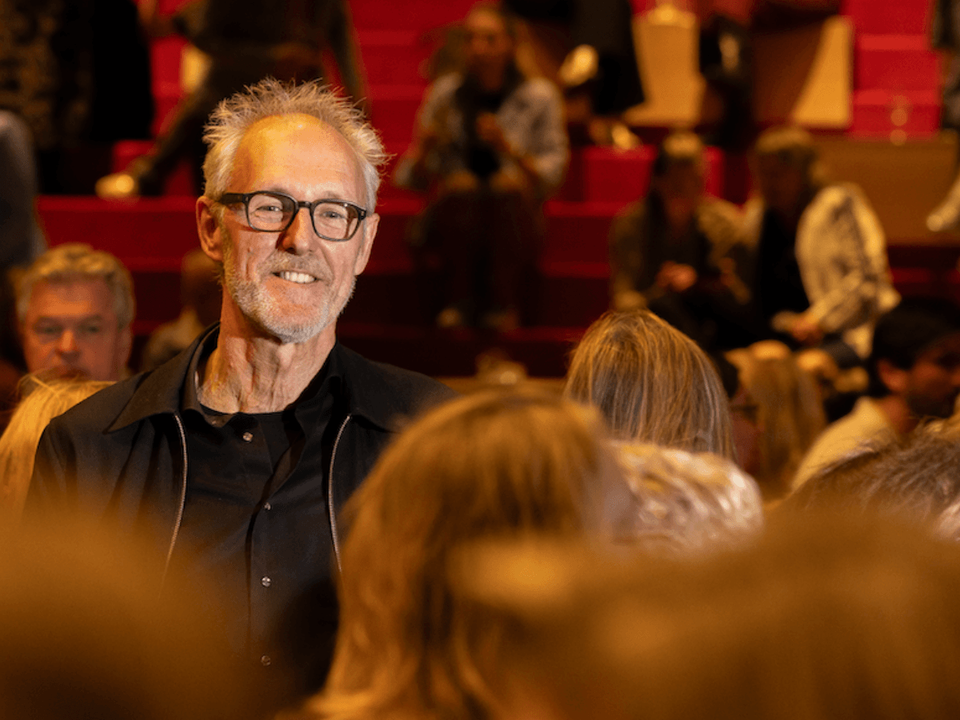
He took the helm of an organisation without a management board or supervisory board, and over ten years transformed Martiniplaza in Groningen into a versatile and profitable multifunctional venue. Now, at seventy, Willem de Kok steps down on 1 July. A conversation about collaboration, identity and the secret of a swinging business.
Your background is in the media, where you worked for various publishers. How did you end up at Martiniplaza?
“I had my own consultancy and worked for about ten years as an interim director. The municipality asked whether I could turn things around. The assignment was initially for six months, but that became a year, then eighteen months. At some point I thought this is actually a great job. Let me just stay.”
What did you find when you arrived?
“After a week I concluded that this is basically just a media company. What we do is bring content to a large audience; whether you do that through print, television or a stage, it doesn’t make much difference.”
“But there was one crucial difference: we have no content of our own. We are essentially a large conduit. There are many parties that come to us with content and use our facilities.”
“If the man with the briefcase doesn’t show up, I have no business. So the first question I asked myself was: how do we ensure that we start creating our own content?”
How did you approach that?
“We started investing in concept development. My publishing background helped with that. In that world you are very concept driven. We began producing theatre shows, organising our own trade fairs and conferences, and collaborating with sports clubs like basketball club Donar. That brought us to the attention of the national sports umbrella body NOC*NSF, which helped us attract other main sport events. In this way we took initiative on many fronts to gain more control over the market.”
You were one of the founding fathers of the theatre alliance - the partnership with other major theatres. How did that come about?
“It started with one major production we had here, which attracted nearly forty thousand visitors. I thought: if we pool our databases – together we had three to four million addresses – then as a producer you can be certain that a title will run.”
“So I approached the other major theatres. We established a theatre alliance, had our own office in Amsterdam, and produced remarkable shows for ten years. Sometimes we made them ourselves, sometimes we commissioned them.”
“It yielded many wonderful productions and a better earning capacity, because when you are the producer yourself, the revenue also comes your way.”
“Collaboration sounds logical, but in practice it is apparently not self-evident. Absolutely not. Even within the theatre alliance – and we kept it going for ten years – it was never a given. It is all about people.”
In his early years at Martiniplaza, Willem de Kok organised the Regional Airport Congress. “I originally come from Rotterdam and there was always controversy there around the airport. And the same was true here in Groningen with Groningen Airport Eelde. So that seemed an excellent subject for a congress on regional airports. Nothing like it existed anywhere in the world at the time. And we got it off the ground. With interesting speakers and above all opportunities for the airport.”
“When we started, there were five directors who firmly believed in the concept. There was no blueprint either. When we sat with the notary to draw up an agreement, they asked for an example. There simply wasn’t one. But we believed in the story and just went ahead.”
“Things became more complicated when directors changed positions. New people question what is already in place, and that is their right. Producing a theatre show yourself costs four to five million, so when six of you are on the hook for that, it is serious money.”
“But it makes such an alliance vulnerable. If collaboration is not in your DNA, the execution proves difficult.”
Could such an alliance model work for conference venues?
“I think it would yield enormously. Large venues are essentially not in each other’s way. The RAI, Jaarbeurs, Ahoy are not competing with us, and vice versa. But if you collaborate, you can attract major international conferences or events to the Netherlands that you could never land individually.”
“During the pandemic it became clear just how valuable that contact is. We had intensive discussions with colleagues in other cities: what solution have you come up with? What works, what doesn’t? It helps you enormously in running your business.”
‘If collaboration is not in your DNA, it simply does not happen’
“But after the pandemic it all fell away again. When there is a common enemy, it works. After that you need something else to bind people together.”
“We are currently working with a number of venues on the project The Media Venue. Martiniplaza attracts around half a million visitors a year. That reach is commercially interesting, but we are barely exploiting that potential. A local car dealer with a car in the main entrance for a year – you can simply charge for that. We are now exploring whether that can be organised jointly with multiple venues, by offering specific target audiences to advertisers and partners in combination.”
“But the same applies here: it is not self-evident. At gatherings of our trade organisation CLC-VECTA everyone shakes hands, and then you all go back to your own agenda. You need a shared goal that truly binds; something that also ties you together financially, as was the case with the theatre alliance.”
Martiniplaza has four product lines: sports, events, theatre and conferences. How do they relate to one another?
“It is a bit like communicating vessels. When there is less supply in theatre, space grows in the conference market. You always end up at roughly the same revenue ceiling.”
“In terms of distribution it is roughly a quarter each; though it shifts with odd and even years. In odd years the conference market is stronger. That is probably related to the major sports events that take place in even years.”
“What multifunctionality brings us is resilience. When one market is tough, you recover through another. And in the organisation we connect everything. The same staff member works the interval at a sports match and the following day at a theatre performance. That makes you very agile.”
Martiniplaza is partly funded by the municipality. How exactly does that work?
“We receive a maintenance subsidy; beyond that we operate on our own. In recent years we have created a separation between a real estate company and an operating company, to make clear where the focus lies. In a building from 1969, maintenance is already complicated enough, especially when it comes to sustainability.”
“Over the next ten years the real estate company will receive additional funding from the municipality, so that we remain in a position to move to a new situation. If you do nothing now, in ten years you no longer need to build.”
Groningen has not had its own convention bureau for years. What is your view on that?
“We are one of the few major cities that does not have one, and that is a shortcoming. We started our own conference alliance and are now handling the business market marketing with a number of partners, but with limited resources. The alliance has been running for ten years now and it is time for it to move to the next phase.”
“We are now at the point where we can definitively establish a convention bureau by the end of this year or the beginning of next year. Funding is coming from the municipality, the province and the business community.”
‘We are one of the few major cities without a convention bureau, and that is a shortcoming’
“We are also receiving funding from Nijbegun, which is the compensation money for earthquake damage. The leisure economy is very important within that, and we have been asked to take on the business market segment. Business gatherings carry enormous spin-offs, so economically it is an interesting investment. I am currently working on this through my role here, and I think – after I leave – I will continue to be involved with it for a while.”
“Groningen has all the ingredients: a strong university, major themes such as energy transition, health and agriculture. So in terms of concept development there is still much to be gained, both nationally and internationally.”
What is the finest thing you have achieved?
“That we simply have a very swinging company. Incredible hard work goes in, from a small team, and everyone gives their all. It is a very flat organisation: a management team and the multidisciplinary teams on the floor.”
“But what makes me most proud is that the people here who found themselves in a situation that was none of their making – a few wrong turns had simply been taken by others – are now free of it. That it succeeded in this way. That we were truly able to do it together.”
And yet you decided to leave. What was the deciding factor?
“Age, to be honest. During the pandemic I turned 65, and things suddenly went very quiet. I thought: if this is my farewell, that is not good. After that I spoke with the aldermen, my shareholders, several times about my departure.”
“Last autumn I turned 70. Leaving immediately after the municipal elections seemed like a good moment. The idea being that after these elections there is always a reset of everything. But it is with a heavy heart. This company has truly gotten under my skin.”
What will you do on your first truly free day?
“On holiday. We are going to a family house in Sardinia, so that is where we are headed. I am curious how that will go. Normally I always do a bit of work during the holidays. Now it will be like going on holiday as a child, completely carefree, not having to think about anything. But I cannot sit still either. I am going to restart my consultancy and certainly want to continue contributing to the conference market.”
What would you like to pass on to the industry?
“Seek each other out. Don’t take it all too seriously but seek each other out. I think that offers countless opportunities for the entire sector. We are not in each other’s way. Present yourself as a country on the international conference market, not as a loose collection of cities and regions.”
“And if one party picks up a piece of the pie, the other will too. My entire working life has taught me: by collaborating you always make the best deal.”
Groningen and Martiniplaza
For Willem de Kok, Martiniplaza and the city of Groningen are two sides of the same coin. When he took up his post in 2014, trust between the municipality and the company was in short supply. Ten years later, the relationship has fundamentally changed.
"We had quite a difficult start," says De Kok. "But ultimately it is pleasant to have a shareholder who understands what you are doing and is willing to think along with you."
That mutual understanding is, according to him, entirely connected to the recognition that a venue like Martiniplaza is far more than a company that rents out event space. The economic spin-off for the city amounts to more than forty million euros annually. When the Concours Hippique is in residence for two and a half weeks, riders, horse owners, and their entourages fill the city's hotels, restaurants, and shops. For Martiniplaza itself, it might be 'just a rental', but for Groningen, it is a major driver. That realization has now sunk in well with the municipality.
Deel dit bericht
Reacties
Er zijn nog geen reacties.
Plaats een reactie
Je moet ingelogd zijn om een reactie te plaatsen.