
The conference is moving beyond the session room
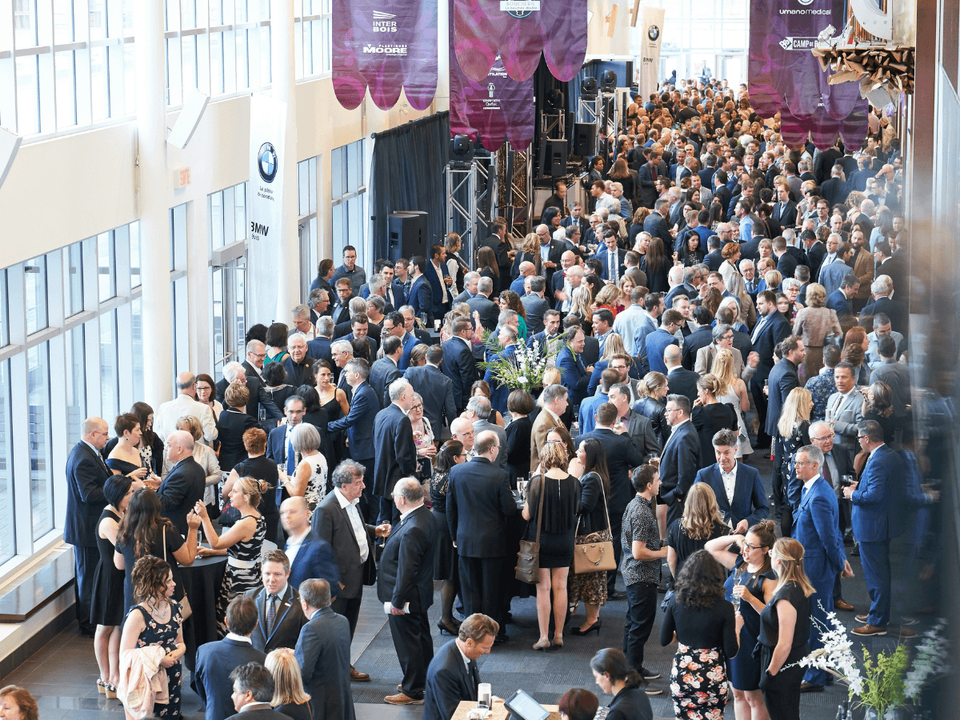
Three recent studies, from ICCA, IBTM World and Freeman, take different routes to the same conclusion: as artificial intelligence takes over more cognitive work, meeting in person becomes more valuable. But that value is not created in the plenary hall. Belonging, ease of navigation and the learning that happens between sessions deserve as much design attention as the programme itself.
For a long time, a conference’s success was measured by its programme and its attendance: the speakers, the sessions and the number of delegates. Attention is now shifting to what happens around those sessions, and to how delegates feel. For international associations whose congresses move to a new destination with every edition, this has implications for how the congress is designed, how the venue is chosen and how results are measured.
Belonging as a design principle
In late September, at the fifth ICCA Future of Healthcare Meetings in Athens, the International Congress and Convention Association (ICCA) launched the first report in a new series: Wavelength Report: Science for Better Healthcare Meetings. A team led by psychologist and designer Mike Morrison reviewed more than 2,000 scientific studies on meeting effectiveness.
The headline recommendation is that organisers of medical congresses should focus first and foremost on each delegate’s sense of belonging. According to the authors, no other factor has as much potential to increase engagement and loyalty. Delegates who feel they have a place in a professional community are more likely to take an active part, recommend the congress and come back. At the same time, the researchers acknowledge that this is precisely where further research is most needed.
Belonging starts before arrival and does not look the same for everyone. A first-timer is looking for a way into the conversation, a mid-career professional wants relevant knowledge, and a long-standing member values reconnecting with peers. Small communities built around shared interests, along with mentoring and well-designed networking, help everyone find their place. Conversely, a programme can unintentionally exclude people through its language, formats or unwritten social norms.
The second insight can be summed up as the path of least resistance. Delegates constantly weigh up what is worth their time and effort. A strong session loses its audience because of a vague title, a valuable poster is passed over because its key finding is buried, and an exhibition located far from the session rooms rarely gets a second visit. Clear information, intuitive wayfinding and time to explore lower those barriers. When it comes to building skills, the report recommends active formats: demonstration, hands-on practice, feedback and checking whether the learning sticks.
AI makes meeting in person more valuable
The IBTM World Trends Report 2027 places the same human factor in a broader economic context. The report was written by Alistair Turner of Eight PR & Marketing, with contributions from Megan Henshall of the Google Experience Institute. The first findings were released in mid-October; the full report will be presented at IBTM World in Barcelona (17–19 November).
Its core message: as AI takes over more cognitive work, imagination, learning and trust become more valuable, and so does the physical gathering. The report refers to a ‘Brain Economy’ estimated at US$6.2 trillion and introduces ‘regeneration’ as the next phase of the experience economy, following earlier editions that centred on personalisation and transformation.
The report asks whether the industry has underestimated the importance of friendship and social connection when measuring success. In an era of hybrid working and rising loneliness, in-person gatherings can play a greater role in building relationships and trust.
Henshall argues that many of the stories organisations tell about themselves were written for a world that no longer exists, and that events are one of the few places where people can come together to write new ones.
Learning beyond the session room
US event company Freeman shows in concrete terms where that learning and connection actually happen. For the second part of its trends report, Unpacking XLNC: The Future of Adult Learning at Conferences and Trade Shows, Freeman surveyed more than 3,300 attendees and exhibitors. Attendees would ideally spend 54 per cent of their learning time outside traditional session rooms; at trade shows, that figure rises to 64 per cent.
Attendees even rate learning through networking and exhibitor interactions slightly higher than traditional conference sessions. Younger generations are reinforcing this trend: two thirds of them want more learning opportunities outside the session room. According to Ken Holsinger, SVP Strategy at Freeman, learning does not begin when attendees take their seats in a session, and it does not end when they leave the room.
Sponsored sessions turn out to be less controversial than is often assumed: 84 per cent of attendees are neutral to positive about them, provided the sponsorship is clearly disclosed. The relevance of the topic matters more than who is paying. And only 19 per cent cite earning continuing education credits as an important reason to attend.
What this means for associations
Taken together, the three studies make clear that the programme itself is not the only pillar a congress rests on; what surrounds it carries at least as much weight. For associations choosing a destination and venue, the questions are shifting accordingly. It is no longer just about how many seats the plenary hall has, but also about whether walking distances are short, whether the exhibition is close to the session rooms, whether there are spaces where small groups can talk undisturbed, and whether the city offers places to meet beyond the convention centre.
Measurement is changing too. All three reports show that attendance figures say little about what a congress actually delivers. Anyone who wants to know whether delegates have learned something, formed partnerships or changed the way they work needs to look beyond the final day of the congress.
Deel dit bericht
Reacties
Er zijn nog geen reacties.
Plaats een reactie
Je moet ingelogd zijn om een reactie te plaatsen.