
Conferences
Scrap the Q&A
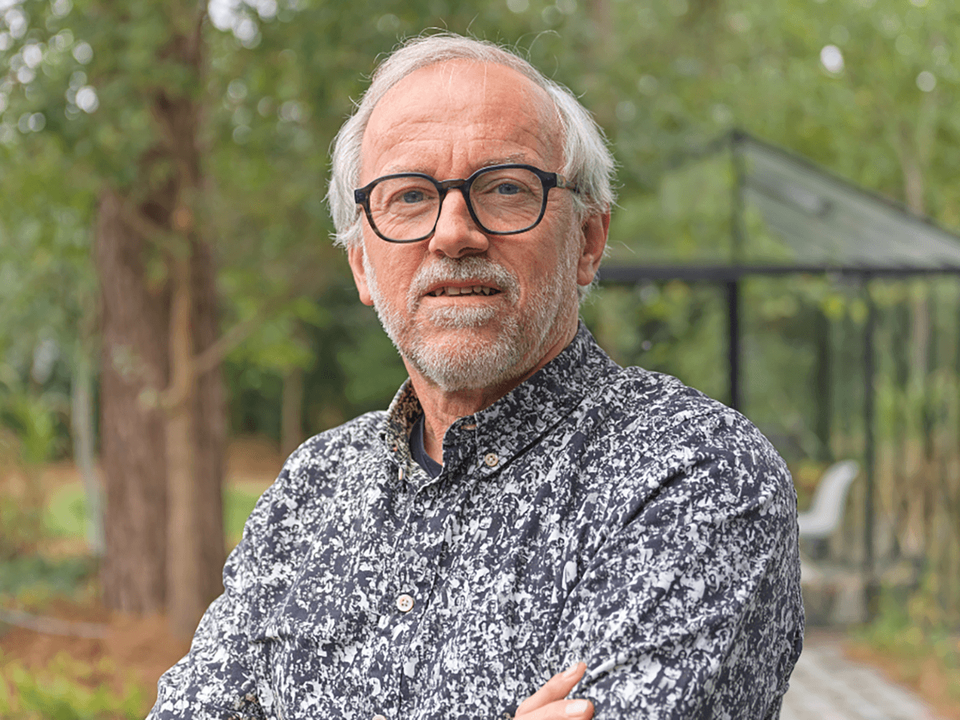
According to meeting architect Maarten Vanneste, the most widely used interaction technique at conferences is also the worst. His alternative costs nothing, requires no training and works in any room layout.
Objective, venue, technology, programme, speakers: each one is important, and each one is expendable. Without participants, however, there is no meeting. They are the only indispensable component, so that is where the design should focus.
That reasoning leads Maarten Vanneste to an uncomfortable conclusion: the Q&A, the technique meant to engage participants at virtually every conference worldwide, is the worst tool the industry has.
Vanneste started out in 1982 as an audiovisual supplier. He later set out the principles of meeting architecture in his book Meeting Architecture: A Manifesto, and now devotes himself entirely to his Meeting Design Institute.
What kept nagging at him was that sophisticated meeting design so often proved too complicated, too expensive and too difficult to scale. “I was looking for the simplest, cheapest thing that anyone can do and that changes everything,” says Vanneste. His answer is CAT: Conversation About the Topic.
Networking left to chance
Participants attend for three reasons: learning, networking and motivation. Vanneste builds on the ROI pyramid developed by Jack Phillips and Elling Hamso, but with a twist of his own: he treats learning and networking as two fundamentally different objectives. “You do different things for networking than for learning.”
That distinction is crucial. The unique strength of a physical meeting lies in human time and human contact, and in the trust that only develops when you meet someone in person. Learning can now happen anywhere: online, on a video platform or even with an AI assistant. But only a physical meeting can bring people together around shared expertise.
And that is exactly where the industry falls short. Almost nothing is done to improve networking. We rely on serendipity – the chance encounter – and on the coffee break. Yet during that break, everyone gravitates towards the people they already know, while meeting a stranger is worth many times more than talking to an acquaintance: it could lead to a project, a client or a new idea.
What goes wrong with the Q&A
During a Q&A in a room of a thousand people, one or two talk to the speaker while the rest listen passively. Hardly anyone is engaged, and there is no real interaction. What’s more, those who take the microphone often don’t ask a question at all. Vanneste: “They make a statement, because they feel they should have been on stage themselves. We waste five minutes on it every time.”
The alternative: talking about the topic
CAT is the mirror image of the Q&A: “Conversation About the Topic” instead of “Questions and Answers”. The premise is that the people in a session are not a random group, but what Vanneste calls “perfect strangers”: people who don’t know each other and would never meet outside this room, yet who have been brought together by exactly the same interest. Having them discuss the topic with each other for ten minutes is the fastest and most effective form of networking there is.
The basic script
Take a one-hour session with one speaker. Split the presentation into three ten-minute blocks, each followed by a CAT round in which participants discuss at their tables what they have just heard. Tell the speaker they have thirty minutes, in three parts, even though the session is listed as an hour in the programme. Allow roughly one slide per minute, with no animations. A table of five is ideal: four “perfect strangers” plus yourself. At tables of three or four, the number of new contacts is too low.
It works in any room layout, including an auditorium, where people simply turn around to face the row behind them. And it costs nothing: no facilitator, no training, no equipment, no extra line on the invoice. It scales from five people at a table to a room of four thousand.
Variations are possible – a round of introductions, feedback from the CAT groups to the speaker, music or a moderator – but these are secondary, says Vanneste. Start by using CAT in every session, and only then begin experimenting. “If you don’t do this in every presentation, you’re making a mistake.” It does call for a different type of speaker: not the keynote performer with a polished, fixed story, but the expert who wants feedback from the room.
The business case
What is one good new connection worth? Estimates vary widely, from an average of around €1,500 to between €30,000 and €100,000. Vanneste estimates that a conference relying solely on Q&A yields around five meaningful new contacts per participant; with CAT, that figure rises to around forty. Extrapolated to a multi-day conference with several CAT sessions, he claims it delivers twenty times as much value.
Vanneste himself adds a caveat: “It’s just an example.” The point is not the precision of the figures, but the scale of the effect.
The human side
Ultimately, this is not about data, but about people. The younger generation learns online and travels less for training: they have a hundred online friends, but hardly anyone they see in person. At CAT tables, a student and an expert with thirty years’ experience may well end up as mentee and mentor.
Anyone who wants to get started can draw on the materials Vanneste provides: the book as a PDF, a video that exposes the shortcomings of the Q&A, CAT slides, a white paper and a template script. All are free to use and distribute.
The rest is up to the industry: do we dare to abandon the conference’s worst habit in favour of the cheapest improvement there is?
Free materials: payhip.com/MeetingDesign
Deel dit bericht
Reacties
Er zijn nog geen reacties.
Plaats een reactie
Je moet ingelogd zijn om een reactie te plaatsen.