
Medical congresses need to be more responsive to attendees’ needs
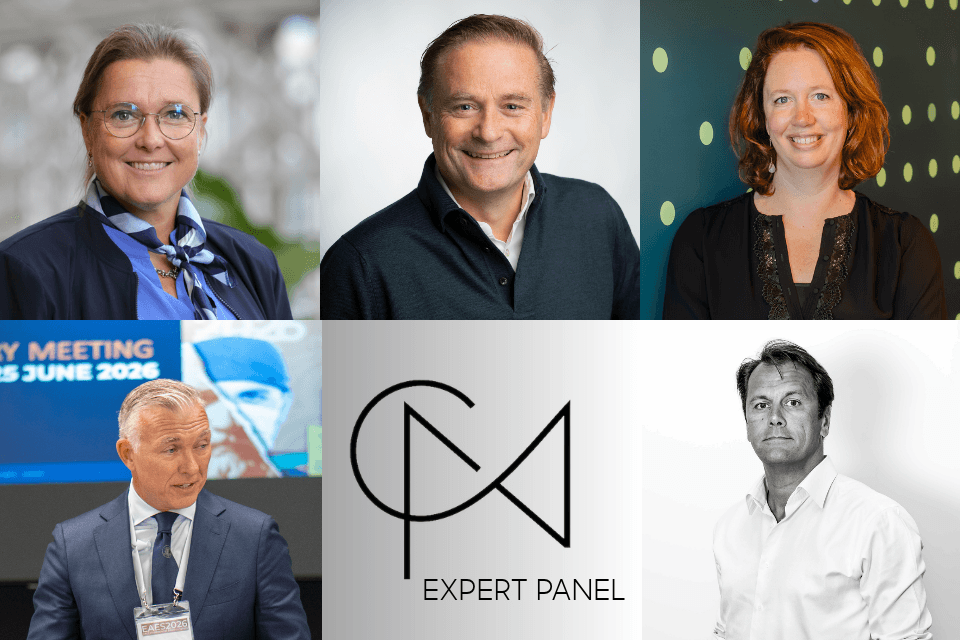
Organisers of medical congresses need to pay more attention to attendees and their opportunities to network with one another, and make it much easier for them to find sessions, posters and exhibition stands, according to a recent report by the International Congress and Convention Association (ICCA). Five meeting professionals share their reactions to these findings.
Arjan Appel, executive director, European Association for Endoscopic Surgery (EAES)
A roadshow with seven surgical robots
‘Of course you have to pay attention to the individual attendee, but if no tickets are sold, the whole event can’t go ahead. On top of that, medical congresses can’t exist without support from the industry. Whereas a management consultant will pay €1,500 for an event without complaint, a specialist’s limit is a few hundred euros for a national meeting and twice that for an international one. Sponsorship keeps registration fees low, but sponsors naturally want something in return.’
‘Fortunately, endoscopic surgery lends itself well to hands-on experiences. Doctors come to the congress for continuing medical education, training programmes and exams, but we also offer workshops where participants can practise techniques. There’s room for gamification, too, such as a competition to tie knots as fast as possible with endoscopic instruments. At our 2027 congress in Düsseldorf, there will be a roadshow where surgeons can test-drive seven different surgical robots in ten-minute sessions. Doctors won’t have to travel halfway around the world for that, because the robots will all be there in one place.’
‘That’s how we try to convince industry that we’re not selling them square metres, but opportunities to engage with attendees and connect them with each other. That way, you try to find a format that works for everyone. For our association, it’s important to stay relevant in a rapidly changing field. Promoting minimally invasive surgery, which keeps incisions as small as possible, is one of our goals. Surgical robots fit in perfectly with that.’
‘If you champion innovative techniques, your congress has to be innovative too. Nobody wants to sit in a stuffy hall listening to lecture after lecture – often around eighty of them. A recent survey showed that 44% of our attendees find that too many. There’s politics involved as well: everything has to be covered and everyone wants to have their say. So we’ve divided the programme into eight tracks, corresponding to the different specialties within the field. Each track has its own colour in the app, to make it a bit more visual and easier to navigate.’
Marije Sant, account manager, Congress by Design
When science connects, everything is possible
‘We’ve been working on community building for some time. A congress isn’t just about sharing knowledge, it’s also about creating new connections. That’s built into our meeting design. You’ll probably run into the people you already know anyway. But how do you meet the researcher or specialist you haven’t met yet, who might be the very person to spark a new collaboration or idea? It’s precisely those unexpected encounters that can have a snowball effect.’
‘“When science connects, everything is possible” is our vision. That’s why we don’t start with the programme or the room layout, but with the people we’re organising the congress for. Together with the association, we map out the target audience: who they are, what they’re working on and why they come. The association knows a lot about its members. Sometimes they say, “We’ve been doing this for ten years, everyone knows each other, so it’ll be fine.” But if you dig a little deeper, it turns out a lot more is possible.’
‘At the same time, we see that younger generations look at congresses differently. Five days of lectures no longer necessarily suits the way they want to learn. They choose more deliberately what’s relevant to them and put together their own programme. So it’s important that they can easily find knowledge and people. The emphasis is shifting from simply offering information to making it more accessible.’
Marc Liethof, owner and managing director, Eventex
ICCA report outdated and behind the times
Marc Liethof considers the conclusions of the ICCA report outdated. His events agency, Eventex, organises congresses for a wide range of medical specialists, from physicians to surgeons and from intensivists to anaesthetists. ‘We are constantly working on this together with their associations. In the past, congress organisers would rent a small room, switch on the microphone and provide sandwiches. But in recent years, things have changed considerably.’
‘Since COVID, much of doctors’ professional contact happens online. As a result, medical congresses are one of the few chances many doctors get to meet in person. So there is always plenty of room for interaction among participants, from a half marathon to an evening party. Because of the strict rules governing medical congresses, participants have to pay for that party themselves, but we do try to make sure it’s memorable. It has to be something special that also contributes to the shared experience. The idea isn’t just for everyone to head off to the pub together.’
‘The exhibition floor is also set up differently nowadays. We try to avoid a set route past every stand, as you see at some Belgian trade fairs. There are no very large stands. On the exhibition floor, the catering areas blend into smaller sponsor presentations and hands-on workshops tailored to specific groups. The younger generations in particular, including doctors in training, don’t just want to sit and listen in plenary sessions; they want to do something themselves. The sessions are interactive as well. It has been that way for years. That’s why I find a study like this one from ICCA a bit behind the times.’
Carola van der Hoeff, COO, International Pharmaceutical Federation (FIP)
Pay more attention to individual participants, but content comes first
‘I largely agree with the statement that participants deserve more attention. Of course you still need ticket sales for a congress to go ahead, but they shouldn’t be the main goal. A medical congress isn’t only about transferring knowledge, but also about exchanging experiences and building connections.’
‘If organisers are more responsive to the interests and needs of individual participants, that can make a congress more valuable. The report talks about three different groups: early-career, mid-career and senior participants. You could cater to them more, because they want different things. We also have a separate programme for professors, for example. To get them to our congress, we have to make more of an effort, otherwise they say there’s nothing in it for them.’
‘I don’t agree that we focus too much on content. As far as I’m concerned, the content of an event, the educational aspect, should come first. If you get that right, the participants will come. Of course we should make it as easy as possible for everyone to find their way. That’s part of our job. If it doesn’t work well, we haven’t done it properly. Still, it’s less important than the content or the spontaneity of a congress.’
Raymond Borsboom, managing director, Congress Creation
The congress should find the attendee, not the other way around
‘The problem isn’t that organisers pay too little attention to the attendee. The problem is that the medical congress is still set up like a department store. We lay out what’s on offer, and participants have to find their own way, with an eighty-page programme booklet, an app full of filters and a floor plan you only understand by day three.’
‘The ICCA report calls that complacency. I call it a reality. A doctor who is away from their practice for two days wants maximum value per hour. So the right knowledge has to come to them: the session that addresses the question they have today, the poster that touches on their research, the colleague they really need to talk to. That requires you to know the attendee. Not as a ticket number, but as a fellow professional with their own career stage and their own questions.’
‘Associations know a lot about their members, so we try to tap into that knowledge as much as possible. We also ask participants for information through the app. That goes into a database, and we can put it to use with the help of AI. Technology plays an increasingly important role in this, but only when it serves a clear purpose. What we need isn’t yet another app demanding attention, but a guide that thinks ahead, translates and connects. The congress of tomorrow is personal, accessible and smart. Sharing knowledge remains at its core, but the way we do it is changing fundamentally.’
‘You don’t create connections with networking drinks at the end of the afternoon. You design them, from the very first invitation until long after the congress. Those who pair newcomers with mentors and keep knowledge available after the event are building a community rather than a one-off gathering. That’s what we’re building at Congress Creation. But everyone has to take part, including attendees, by answering the questions in the app. That keeps a congress from being a waste of time. And that matters: doctors are there to treat patients, so their time is precious.’
Deel dit bericht
Reacties
Er zijn nog geen reacties.
Plaats een reactie
Je moet ingelogd zijn om een reactie te plaatsen.