
Conferences
Jeroen van Hooff: ‘Our domestic business can’t do without international connections, because knowledge is global’
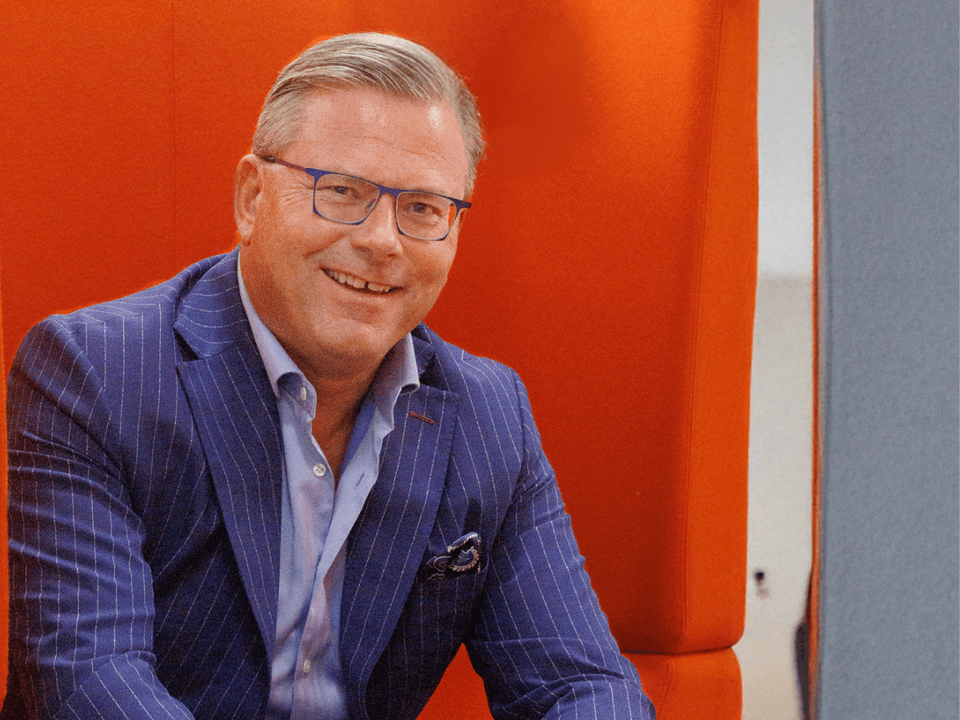
Utrecht is becoming a serious international congress destination, and Royal Dutch Jaarbeurs wants to provide the venue to match. CEO Jeroen van Hooff talks about a new multifunctional complex in the heart of the city, why the exhibition space is getting smaller while congress capacity is not, and the collaboration with RAI Amsterdam.
Royal Dutch Jaarbeurs, founded in 1916 and still owned by a foundation, is the largest international trade fair organiser in the Netherlands. In Asia, it operates through VNU Asia Pacific in Bangkok, a joint venture with Thailand’s TCC Group. Its own complex is located in the centre of Utrecht, about half an hour by train from Amsterdam Airport Schiphol. Jeroen van Hooff has been CEO since July 2022. Since then, he has visited many international venues, conferences and trade fairs, and it shows in his plans.
Jaarbeurs has been working on restructuring and modernising its exhibition and congress centre for years. How far along are you?
‘We’ve drawn up scenarios for our property and are now moving from vision to concrete action, financing included. First, we established what a new venue needs to offer: how many square metres, how many seats in the congress halls.’
‘Sustainability is a major factor: we want to become the most sustainable venue in Europe, and we’re already well on our way.’
‘For me, the biggest win is that we took the time to sit down with the City of Utrecht and look at what the city stands to gain. Building an exhibition hall is not an end in itself. We want a multifunctional building that also contributes to a lively and safe city centre.’
Where do you find your inspiration?
‘I’ve visited many venues abroad. My favourite example is the Queen Sirikit National Convention Center in Bangkok, which recently hosted the Annual Meetings of the IMF and the World Bank. Like us, it’s located right in the middle of the city and is easily accessible by public transport. The building also serves the public. People who exercise in the adjacent park can shower there, and the restaurants and food courts are open even when there’s no event.’
‘That’s in stark contrast to many Dutch venues, which sometimes stand empty for long periods. That’s essentially letting the value of your floor space go to waste.’
What does that mean in practical terms for Utrecht?
'Jaarbeurs and the City of Utrecht share the ambition for Jaarbeurs to remain at its central location, while also creating space for the city’s growing housing needs. That’s why we’re looking at a modular approach and at building vertically. Especially when it comes to parking: much of our parking is still at ground level, while there is a great need for housing in the city centre. Whether that will work for the exhibition and congress facilities remains to be seen. The convention centre in Bangkok has two levels, but more floors also mean more complex logistics and higher costs.’
On course to become Europe’s most sustainable venue
Jaarbeurs aims to become the most sustainable venue in Europe. That ambition is reflected in its day-to-day operations. Jaarbeurs keeps much of this in-house: food & beverage, AV, seating and parking. The head chef uses AI to predict what will be consumed, based on visitor data and historical figures. As a result, there are fewer lorries on the road and less food is wasted. Jaarbeurs is working with stand builders to explore how stands and floor coverings can be made reusable. Whether the new building will include storage for them, to cut down on transport, is still an open question.
‘So we’re also considering how a new building can speed up logistics and increase labour productivity. We also need to be able to stay open during construction. The previous plan didn’t provide for that properly: we ran the risk of having to close for a few years. There are still hurdles, such as the Dutch nitrogen regulations and grid congestion, but we’re in a constructive dialogue with the municipality.’
Will the exhibition space shrink, as in the previous plan?
‘Yes, it will be smaller than it is now. You see enormous venues all over the world, and not all of them are successful. Some are only fully booked once a year. We can’t afford to keep that much space for one trade fair a year, so we’re looking for the sweet spot.’
‘The congress facilities certainly won’t shrink – if anything, they’ll grow. Knowledge is becoming increasingly important, and congresses and breakout sessions are increasingly linked to trade fairs. You could see that at the IMF meetings in Bangkok too: meetings on the exhibition floor, and separate spaces for media and security. So a venue needs multifunctional space.’
What kind of investment are we talking about?
‘Hundreds of millions, whichever way you look at it. The original master plan came to around €300–400 million, but construction costs are rising by 4 to 5 per cent every year.’
‘It does have to make sense for our business model. Our motto is “Halve the footprint, double the impact”: a smarter, more efficient building with public space that brings vibrancy and social impact almost 24 hours a day. Part of the financing will come from selling land.’
‘We’re also continuing to explore whether the municipality wants to co-finance, for example by housing city facilities in the building, such as a museum or an innovation hub. I find that in the Netherlands we have to work harder to make the case for our economic impact than in India or Thailand, where they roll out the red carpet for you.’
Carrousel
This year, you began organising events outside the Netherlands together with your competitor, RAI Amsterdam. How did that come about?
‘I have a very good relationship with Maurits [van der Sluis, COO of RAI Amsterdam – Ed.] and approached him during a UFI congress about the international opportunities I had identified.’
‘RAI has titles such as Intertraffic, Aquatech and Interclean, which I believe could work in Asia, and we have a company in Bangkok that can organise them. The result is Aquatech Asia, taking place from 25 to 27 November at QSNCC, organised by VNU Asia Pacific together with RAI Amsterdam. Just a few weeks ago, Bangkok was under water, and the Netherlands has a strong reputation in water management. In April 2027, together with RAI, we’re launching Intertraffic Asia in Bangkok. RAI brings the community; we bring the network and handle the operations.’
‘Through VNU Asia Pacific, we’re now one of the top three trade fair organisers in Southeast Asia, alongside Informa and RX. I’m very proud of that.’
Where is Jaarbeurs growing internationally?
‘We focus on three strategic markets: construction, healthcare and life sciences, and agrifood. In those markets we acquire trade fairs and platforms, such as Foodbytes, which we recently acquired from Rabobank. But in agrifood, organic growth worldwide is outpacing that.’
‘We also geo-clone successful trade fairs, taking them to new regions. In March 2027, we’re organising VIV Asia in Bangkok, the largest trade fair in our history. We’re active in Thailand, Vietnam, the Philippines, Indonesia and China.’
Year-round lead generation
In further developing Royal Dutch Jaarbeurs’ range of services, Jeroen van Hooff puts the greatest emphasis on digital platforms. The company acquired Foodbytes, the food and agri innovation platform, from Rabobank, for example. ‘Lead generation shouldn’t just happen during the trade fair; it should continue all year round,’ says Van Hooff.
Business matching is another of his priorities. Jaarbeurs wants to connect exhibitors with companies they wouldn’t normally meet at a trade fair: ‘a kind of speed date’, as the Jaarbeurs CEO puts it.
‘In India, we announced two promising new shows in quick succession – agrifood show VIV Select India and cybersecurity show Cybersec Connect – and that has given us a taste for more.’
‘We also organise trade fairs in the Middle East. VIV MEA returns to Abu Dhabi in November 2027; despite the unrest, stand sales are on track.’
‘In Africa, we’re in Rwanda and Côte d’Ivoire; the latter also serves Francophone Africa. And we’re cautiously exploring South America.’
How do you deal with the geopolitical unrest?
‘Every quarter, we discuss our risk map with the supervisory board. There’s only one answer: diversification. We’re still heavily dependent on Utrecht, but we now have an international business with solid volumes and healthy margins.’
‘Because we’re spread across regions, visitors who are currently travelling less to the Middle East can choose India or Thailand instead, for example. We saw the same thing during the pandemic: Europe reopened sooner than China.’
Why is this international strategy so important?
‘Because knowledge is global. Our domestic business needs international connections. Our exhibitors want to go to Europe and to Asia. At VIV Europe in Utrecht, 20 to 30 per cent of visitors come from Asia. My dream is that we’ll soon be bringing Indian delegations to Europe and vice versa. Companies that operate globally aren’t interested in just a local trade fair.’
Deel dit bericht
Reacties
Er zijn nog geen reacties.
Plaats een reactie
Je moet ingelogd zijn om een reactie te plaatsen.