Conferences
Integrated event management platforms bring order to chaos
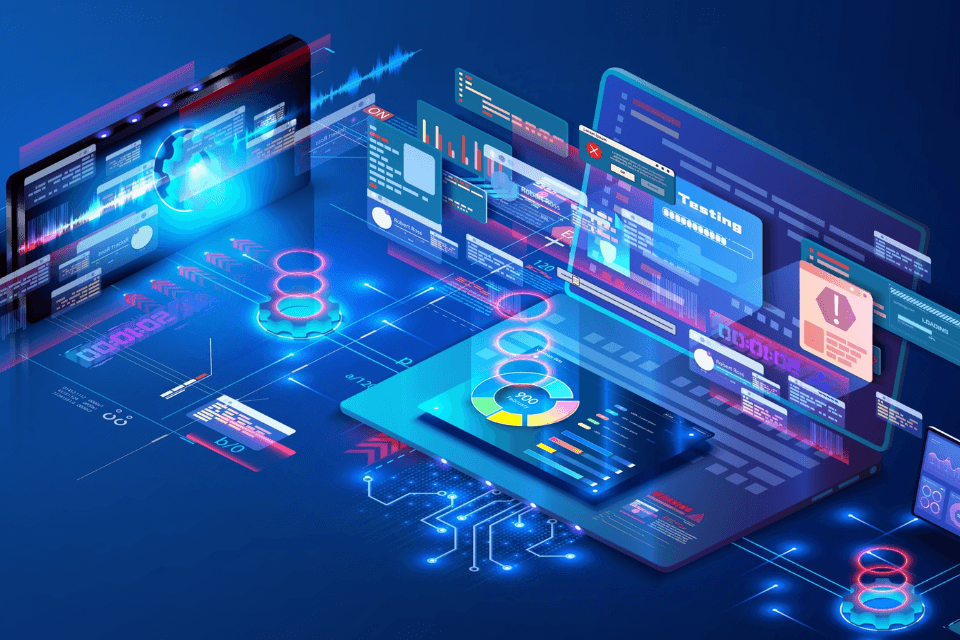
With the shift from a patchwork of stand-alone event apps to integrated platforms, event technology has reached maturity. This solid foundation is now enabling innovation, with AI, real-time analytics, and personalization taking center stage.
The event technology landscape has evolved at lightning speed over the past two years, according to a January 2025 report by the influential research and advisory firm Forrester. Stand-alone virtual event platforms have struggled, as leading providers have expanded their offerings into broader, multifunctional ecosystems capable of running all types of events.
From patchwork to integration
Where organizers once worked with a patchwork of separate applications, there is now a clear shift toward all-in-one platforms that centralize every aspect of event management. The transition is far from complete, though: according to the same Forrester study, 22 percent of large corporations still use six or more different tools to manage a single event.
These can include separate tools for registration, networking, CRM, virtual elements, and analytics, often with overlapping capabilities and poor or non-existent integration. The result is a fragmented approach that creates data silos, duplicate entries, compatibility issues, and inconsistent reporting.
Three industry accelerators
Another major tech research firm, Future Market Insights, identifies three drivers behind the accelerated move toward integrated platforms.
First, the pandemic forced organizers to quickly bolt on hybrid and virtual capabilities, dramatically increasing complexity. Second, shrinking event budgets made vendor consolidation financially appealing. Third, the rise of data-driven decision-making demanded unified insights that a collection of disconnected tools simply couldn’t deliver.
Forrester’s 2024 Wave report further notes that organizations using all-in-one platforms not only reduce costs but also deliver better attendee experiences and scale faster across multiple event formats. The ability to combine real-time data – from registration and engagement to post-event analysis – in a single dashboard represents a major leap forward for strategic event planning.
Technology catching up
Fast-paced advances in software design are also driving the rise of unified event tech. Today’s platforms often feature no-code configuration options, simplifying integrations with systems like CRMs and easing data migration. Still, moving from multiple tools to one platform remains a complex process.
The modern microservices architecture has proven to be another catalyst. By breaking down large applications into smaller modules that communicate through APIs, scalability increases dramatically. Organizations can start with basic functions and expand as their needs evolve, without the disruptive learning curve of migrating to a new platform.
In short, event software is maturing to the level of other business applications. Choosing an all-encompassing solution can deliver major benefits in cost, integration, and training. While new tools may introduce groundbreaking features, these are typically absorbed into established platforms once proven in practice.
AI-driven intelligence
The shift toward integrated systems is closely linked to the evolution of artificial intelligence. AI thrives on centralized data and currently plays a largely advisory role, recommending sessions, tailoring communications, and facilitating attendee matchmaking based on shared interests.
The next step is scaled personalization, where platforms can track entire attendee journeys and respond with customized content, recommendations, and follow-ups. Unified attendee profiles monitor user behaviour across multiple events in real time, enabling instant action. Live sentiment analysis can even help organizers course-correct during an event.
'A fragmented approach results in data silos, duplicate entries, integration headaches, and inconsistent reporting'
NFT ticketing makes a comeback
Although blockchain and NFTs (Non-Fungible Tokens) lost some media buzz, these technologies still hold serious promise, particularly in ticketing for concerts and festivals. NFT-based tickets could tackle long-standing issues in these sectors, such as large-scale ticket scalping.
Unlike paper or PDF tickets, NFT tickets act as unique digital ownership certificates stored securely on the blockchain. They cannot be duplicated, forged, or resold without authorization, and organizers can define resale rules, such as maximum price caps.
NFT ticketing also provides organizers and marketers with valuable data throughout a ticket’s lifecycle – who resells, when, and to whom – helping analyse engagement levels and secondary market effects. Combined with Proof of Attendance Protocols (POAPs), NFT tickets can evolve into collectible digital assets that foster long-term engagement. In the B2B and conference context, NFT badges might grant access to follow-up webinars, exclusive content, or VIP experiences; essentially serving as smart, data-rich loyalty cards.
| Sustainability tracking As personalization features advance, sustainability tracking is becoming a core element of event platforms. Carbon footprint monitoring, paperless workflows, and eco-analytics are increasingly standard. Organizers can assess environmental impact in real time, adjust operations on the fly, and produce sustainability reports for stakeholders. |
Deel dit bericht
Reacties
Er zijn nog geen reacties.
Plaats een reactie
Je moet ingelogd zijn om een reactie te plaatsen.