
Conferences
How the Netherlands lands its summits
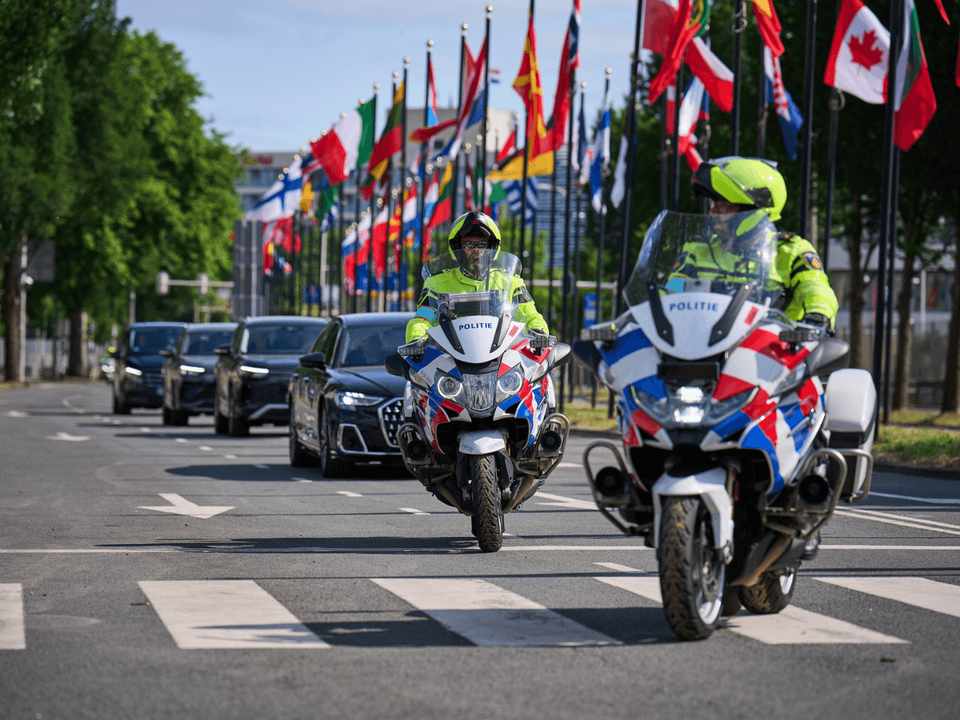
From the 2009 Afghanistan conference, organised in just three weeks, to the 2025 NATO summit with its €215 million price tag, the Netherlands has hosted its share of world leaders. Yet the decision to bring a summit here is rarely made by the people who have to organise it. A former diplomat, a venue director and the NBTC explain how government conferences really come about, and what it takes to pull them off.
International political summits require a great deal of preparation and can be very costly, as in the case of the NATO summit in The Hague. Whether a country manages to land such a conference depends on its involvement in the subject, but the decision usually comes from the top. There is often an ulterior motive, and sometimes it all happens at short notice. The people who have to organise it have little say in the matter, according to those involved – even in the Netherlands, with its famous consensus-driven ‘polder model’, where almost everything is discussed at length.
Former diplomat Ed Kronenburg spent many years working at the Ministry of Foreign Affairs, the European Union and NATO, and served as ambassador in Paris and Beijing. For the European Commission, he organised the donor conferences for Bosnia and Herzegovina together with the World Bank. As Secretary-General of the Ministry of Foreign Affairs, he was tasked in 2009 with organising a summit on Afghanistan within three weeks. “Together with Annet Bertram, then The Hague’s municipal secretary, we managed to organise that at very short notice at the World Forum convention centre in The Hague,” says Kronenburg.
World Forum’s managing director Michiel Middendorf remembers that conference all too well. “Maxime Verhagen was Minister of Foreign Affairs at the time. Hillary Clinton had asked him to organise it and Verhagen had said yes. We heard about it on the news. Before long, the Foreign Ministry was on the phone. Together with a municipal official, we then spent the weekend ‘writing a bid’ and submitted it on Monday. By Tuesday, The Hague had been chosen.”
Protocol
“We had a musical running at the time and fortunately we were able to reschedule a number of its performances,” Middendorf continues. “It did mean we had only three weeks to organise it. That is extremely tight for a conference with such prominent guests as the UN Secretary-General, Ban Ki-moon, US Secretary of State Hillary Clinton and President Hamid Karzai of Afghanistan.”
Government conferences, top-level conferences and summits
Summits belong to a broader category known as government conferences: meetings initiated by governments, intergovernmental organisations (IGOs) such as NATO, the EU or the UN, or by international agencies such as the UN’s Food and Agriculture Organization (FAO) or the European Medicines Agency (EMA). NGOs, scientists and businesses may also take part.
Government conferences can also be national, for example when national, regional and local authorities sit down with their stakeholders to discuss housing or the energy transition. World Forum distinguishes between high-level conferences at the level of a state secretary or director-general, ministerial conferences and conferences with heads of state. Top-level conferences or summits, such as the 2014 Nuclear Security Summit and the 2025 NATO summit with heads of state and government, are the highest tier.
“The only advantage of having so little time is that there is no discussion about the colour of the flowers. Flowers or no flowers: those are the only options. Fortunately, everything went well. Well, almost everything. When we were waiting for our guests at the entrance on Churchillplein, we discovered that there were no flags. We didn’t want the entire press to focus on that, so when a reporter came to ask whether we had forgotten the flags, we told him protocol dictated that the flags only go up once the president arrives. And that is exactly what we did. The flags were up just in time. Yes, sometimes you have to bluff the press a little!”
Security
In 2025, the same World Forum was the setting for the NATO summit. Preparations took eighteen months, and the summit cost central government and the City of The Hague a combined €215 million. The idea of bringing the summit to the Netherlands was first raised by then Prime Minister Mark Rutte at the NATO summit in Madrid in June 2022.
That he would return three years later as NATO Secretary-General was perhaps no coincidence.
“NATO has 32 member states, and sooner or later, each of them gets a turn to host,” Kronenburg points out. “For a small country like the Netherlands, that means all hands on deck. From a political point of view, such a conference is interesting, but it is also extremely expensive. Particularly when the US President attends: the security operation alone is enormous. Heavy security is becoming the norm anyway, whether for a visit by the French president or the German chancellor, or for major sporting events.”
Middendorf agrees. Thanks to all those government conferences, World Forum now has a great deal of experience with ‘safety and security’. When needed, it can call on its French parent company, GL events. “Outsourcing to a security company is not an option. Worldwide, most incidents are prevented because one member of staff was paying attention – a cleaner, say, or someone in the kitchen. What matters is that we are all alert to it.”
“Safety and security are now in our DNA, and that makes us increasingly attractive for international corporate events. For instance, we had to demonstrate to a large tech company how our cybersecurity is set up. Because we had it covered, they’re coming back next year.”
Spinach leaf
A summit also calls for all kinds of practical adjustments. For the NATO summit, for example, a row of trees had to be relocated to make room for a temporary structure. Extra-thick carpet had to be laid everywhere. For security reasons the wifi was switched off and internet access had to be provided by cable. The Americans came with their own security and with food tasters, which made serving snacks and appetisers complicated. Nor was anyone prepared for one of the heads of state suddenly wanting a club sandwich.
“When catering for world leaders, you have to take all sorts of things into account,” says Middendorf. “You’re better off leaving out the spinach. Imagine it getting stuck between someone’s teeth during the photo op. It sounds trivial, but that is the level of detail we work at. Our kitchens cook halal and pork-free as standard, which saves a lot of discussion.”
“Staff are forbidden to take a photo or a selfie with famous people, and we also agreed in advance that our regular clients should notice nothing of the NATO preparations. A summit like that is a one-off. Those other clients come all year round.”
Diplomacy
Whether a country can attract government conferences depends largely on how closely it is involved in the issue, Kronenburg explains. “When it comes to the Middle East, I don’t see the Netherlands playing a role there. That’s a matter for the big geopolitical players. Peace negotiations usually take place on neutral ground. Often in Switzerland, in Geneva. And that’s how it should be. Other European countries don’t get a look-in there either.”
Because of the European Union, many conferences end up in Brussels or Strasbourg. “That’s another route: through your EU counterparts. That’s how I lobbied for support for a Dutch bid at the time.”
Such conversations do require a fair amount of preparation. “You have to be able to get your story across well. You have to be able to gauge where the other person stands. What ties do they have with the Netherlands? Do they even know the country? Is there something in your proposal that benefits their country too? What else can you offer? It’s the classic diplomatic game.”
Prime Minister
“The decision to organise a summit usually comes from the top,” says Kronenburg. “The Prime Minister is key, as that is usually where the decision is made. But this isn’t Paris, where conferences are held constantly: on Ukraine, on the Middle East. Under Macron, France has been extremely active on this front. The Netherlands could do that too, if it wanted to,” he states. That said, the Netherlands plays a smaller role on the world stage.
Conferences in Paris under Macron
From the outset, President Macron has presented himself as a world leader, thereby following in the footsteps of historical predecessors such as De Gaulle and Mitterrand. Since he took office in 2017, Paris has therefore been the setting for a wide range of international conferences. In the first term of his presidency the emphasis was on climate and peace, and in his second term the focus has shifted to harder-edged themes such as space, AI and defence. Besides being a way of diverting attention from domestic problems, as critics claim, conferences allow Macron to profile himself as the unofficial leader of Europe, while at the same time strengthening his country’s international position.
Kronenburg does not know whether anyone actively lobbies for such conferences. He suspects that there are people working on this at the various ministries. “So it is a good idea to keep your ear to the ground there, so that you can look a few years ahead. World Forum certainly keeps an eye on that, together with the mayor, the municipality and the ministries. The Hague is a small world, but you still have to go out and get it. Sometimes you see it coming. Sometimes you are one of the candidates. Sometimes you plan it and sometimes it just happens.”
Mission-driven innovation policy
A number of years ago, the Netherlands Board of Tourism & Conventions (NBTC) explored whether it could initiate government conferences itself, says Eric Bakermans, manager meetings & conventions at the NBTC.
“That proved difficult. We focus more on conferences that contribute to the knowledge economy. The ‘mission-driven innovation policy of the central government’, as it is called. Events in the field of the energy transition, for example. That’s high on our agenda: areas where we want to move faster than other countries.”
“We try to position the Netherlands as an international conference and meeting destination. Government conferences, however, work differently from an association congress. They have no formal bidding process, no fixed rotation pattern, and the initiative often comes from governments, which also take responsibility for the content, the logistics and sometimes the costs.”
Security Summit
“Our influence is therefore limited,” says Bakermans. “I would very much like to play a bigger role in that. But I’m never at the table when the decision on such a conference is made.”
“Of course it is not only ministers who decide on this, as there is often an entire civil service apparatus behind it, but take the Nuclear Security Summit. At the 2012 edition in South Korea, Prime Minister Rutte put his hand up: we’d like to host the next one. And that’s exactly what happened. In 2014 we had the Nuclear Security Summit in The Hague.”
“Once a government — be it the Dutch or the Portuguese — has put its hand up, the choice has been made and our role is over. We did try to contribute, with our knowledge and advice, but it has to be a two-way street. In the end it remained a matter between the government and the organisers. I can understand that, because sometimes there are interests in the background that weigh more heavily, such as security or confidentiality.”
UN city number two
As the convention centre of the Dutch seat of government, World Forum has little to complain about. Moreover, The Hague is the ‘number two UN city in the world’, as Middendorf puts it. “Organisations such as the International Criminal Court (ICC) and the Organisation for the Prohibition of Chemical Weapons (OPCW) hold their annual meeting at World Forum.” The venue also attracts conferences of other international organisations, such as the Council of Europe’s Register of Damage for Ukraine (RD4U), as well as national government agencies such as the National Cyber Security Centre (NCSC), with its annual ONE Conference.
That doesn’t mean it all simply falls into World Forum’s lap. “The Hague is the seat of government, but not the capital. So we’re not a first-tier destination like Amsterdam, we’re second-tier,” notes Middendorf. “To host a major conference here, we have to work just as hard. I don’t want to overstate our role – we’re just a private company – but our director of public affairs keeps a close eye on what is going on at the ministries. And if she discovers that people there are working on the same subjects or themes, she is very skilled at bringing them together.”
Positioning
World Forum hosts all kinds of conferences and events. Sometimes these come via parent company GL events. Government conferences are nevertheless an important part of the portfolio. “Every city, every convention centre, has its own profile,” Middendorf believes. “It is a bit of an oversimplification, but for cybertech, security, peace and international justice you go to The Hague. When it comes to logistics you go to Rotterdam, and for finance to Amsterdam.”
Bakermans of the NBTC can see why many of these conferences go to The Hague, as that is where all the embassies are located, after all. Yet according to him, other convention centres need not be jealous. “The question is also whether they have room for this kind of conference. The calendar is usually filled long in advance with trade fairs and conferences, so clearing the venue for weeks to build something like that is often impossible.”
Government conferences are not necessarily a golden goose. “They can require a lot of preparation,” Middendorf explains. “That doesn’t mean they are always more expensive. It really depends on what the client wants. Security, decoration, catering. Moreover, the taxpayer is always part of the conversation. People are well aware of that and therefore try to keep costs within limits. Corporate conferences don’t have that problem. They don’t have to answer to the public and can really go all out.”
Conferences in the Netherlands
The next NATO summit is unlikely to come round again any time soon, but in 2029 the Netherlands will hold the presidency of the European Union. “That is bound to produce quite a few meetings,” Kronenburg believes. “Last time, in 2016, the Marineterrein in Amsterdam was used for that. Having all those meetings at one location is quite convenient, but you could also spread them out a bit, so that other convention centres get their share too.”
The NATO summit does have a follow-up of sorts: the European Defence Innovation Forum will take place at World Forum in The Hague on 11 and 12 November 2026. “It is about the extremely rapid innovation in the defence industry,” says Middendorf. “Drones play a crucial role in that. The first edition last year [2025] was a modest affair, and this year [2026] it is a combination of trade fair and conference with many exhibitors. Increasingly, meetings from The Hague Security Delta are also coming our way.” That is The Hague’s cluster of companies and knowledge institutions in the field of security.
Reconstruction conferences
“Internationally there is a great deal of interest in conferences on the reconstruction of both Gaza and Ukraine,” says Kronenburg. “Nobody knows yet how those wars will play out, so for the time being it is all still hypothetical. As for Gaza, I don’t see what you could do there. You can’t even get in, so there’s nothing in it for business.”
“As far as Ukraine is concerned, it is also still premature, because for now there is still a war going on there. Part of the money for the reconstruction of Ukraine comes from Brussels, so I expect the first donor conference to take place there. That is certainly a route to securing contracts. You can also organise a conference yourself. For larger conferences you could team up with Brussels or Antwerp, or with Germany from Maastricht – much as countries now co-host the football World Cup.”
In specific areas, the Dutch business community can make a valuable contribution to that reconstruction. “You could also divide that reconstruction by sector,” Kronenburg suggests. “One country takes infrastructure, another housing. Either way: if you want to do something in Ukraine, you have to talk to the Ukrainians,” he warns. “You shouldn’t make the mistake of thinking you will just come and sort it all out. Ukraine is perfectly capable of organising things itself. So if you want to win a contract there, you have to consult with them, ask what they want and how they envisage it.”
658 billion dollars for reconstruction
At the beginning of 2026, the World Bank estimated the cost of recovery and reconstruction in Ukraine at 588 billion dollars. For Gaza, the estimate is around 70 billion dollars. The reconstruction of Gaza has so far not progressed beyond plans and emergency aid. Ukraine, by contrast, has already secured tens of billions from the World Bank and through loans and grants from Europe.
In Warsaw the Rebuild Ukraine Conference is held annually for this purpose. In addition, since 2022 the international Ukraine Recovery Conference has taken place every year, with editions in Berlin (2024), Rome (2025) and Gdańsk in Poland (2026), among others. A follow-up will take place in Tallinn, Estonia, in January 2027. For Gaza, a reconstruction conference was planned in Cairo in 2025, with the Netherlands, France, Germany and the United Kingdom as co-hosts, but that conference did not go ahead.
The idea behind these conferences is that companies from the host country can use their network to win contracts. With billions in European funding involved, these are large and often multi-year contracts. Like their counterparts elsewhere, Dutch firms are keen to get a piece of the pie. They are encouraged to do so by the employers’ organisation VNO-NCW and the Netherlands Enterprise Agency (RVO). In addition, through the export credit agency Atradius DSB, the Dutch state insures the financial risks, covering up to 98% of any losses.
Deel dit bericht
Reacties
Er zijn nog geen reacties.
Plaats een reactie
Je moet ingelogd zijn om een reactie te plaatsen.