
Conference Matters international
Geopolitical unrest rewrites the conference agenda
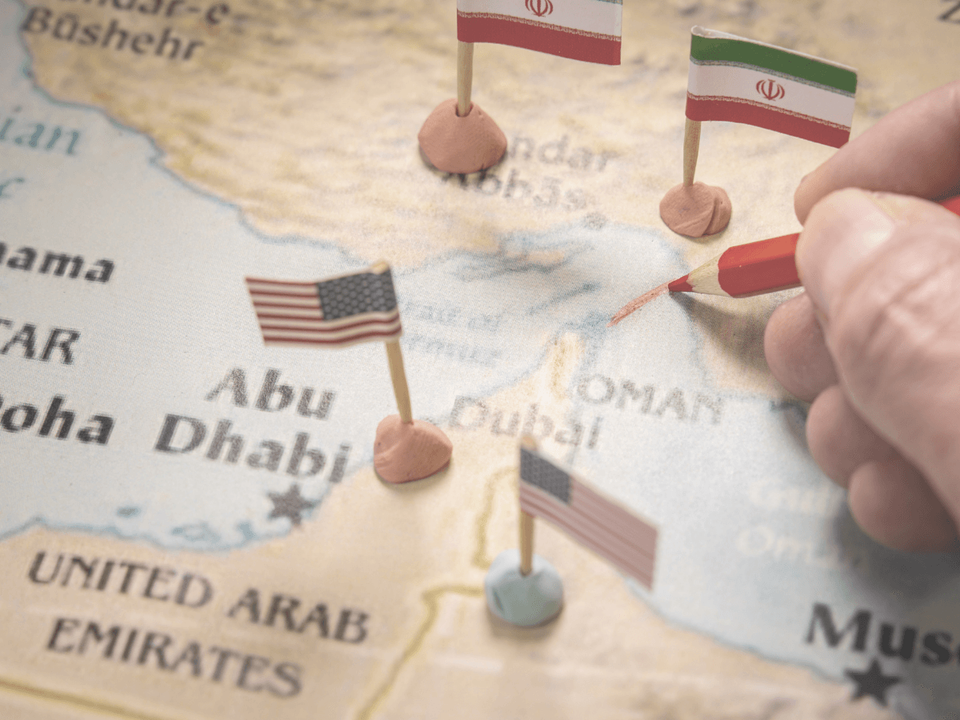
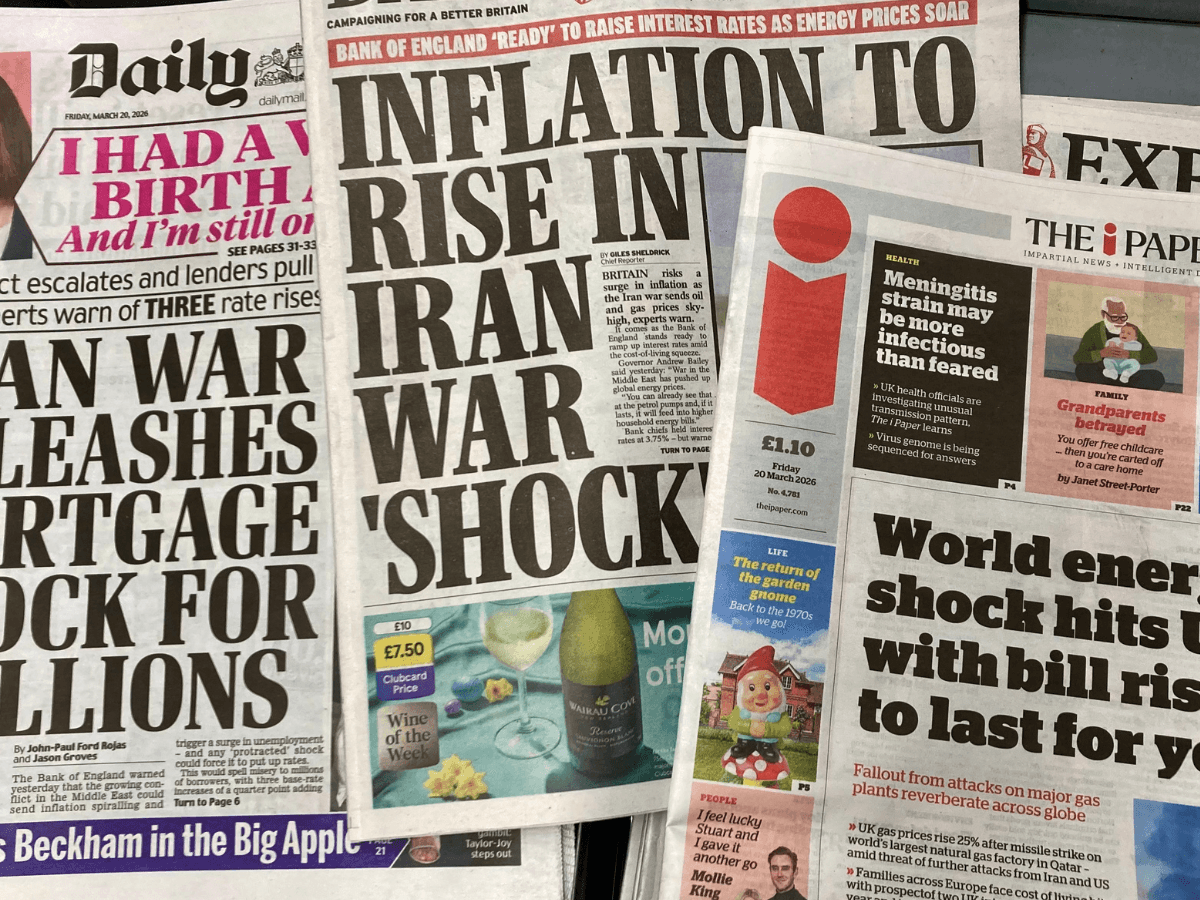
That war has a direct impact on the conference sector in any given region goes without saying. The ongoing hostilities in the Middle East are the most recent illustration of this.
Following the Gaza war that began in October 2023 and the Twelve-Day War between Israel and Iran in June 2025, the conflict reached a new peak when the United States and Israel carried out air strikes against Iran on 28 February of this year (2026), prompting Iran to retaliate with missile and drone attacks on Israel and American allies in the Gulf states.
Airports in Dubai, Abu Dhabi and Doha were hit by Iranian strikes and airlines cancelled flights across the region. The US State Department urged all American citizens to leave Bahrain, Egypt, Iran, Iraq, Israel, Jordan, Kuwait, Lebanon, Oman, Qatar, Saudi Arabia, the UAE and Yemen immediately.
Postponed, cancelled or relocated
Cancellations and postponements of planned events followed in quick succession. The Dubai edition of the crypto conference TOKEN2049 was pushed back to 2027, citing uncertainty about safety and international travel. The AIM Congress in Dubai was moved from April to September. Saudi Arabia’s flagship technology conference LEAP, which had expected more than 200,000 visitors, was also postponed to late August. The Megacampus Summit in Dubai, with 7,000 participants from 102 countries, likewise opted for a later date.
The International Association of Public Transport cancelled its 2026 UITP Summit in Dubai entirely. The next edition will now take place in Hamburg, Germany.
Other associations chose to relocate their congress. Owing to the ongoing uncertainty in the Middle East, the MICCAI board decided to move its International Conference on Medical Image Computing and Computer Assisted Intervention from Abu Dhabi to Strasbourg, France. The new dates are 27 September to 1 October 2026. Venue capacity, site availability and affordability all played a role in the choice of Strasbourg. MICCAI 2029 remains scheduled for Abu Dhabi.
Return planned
IFES, the global federation of exhibition and event service providers, managed to relocate its world congress whilst retaining the original dates. The IFES World Summit was due to take place from 16–19 June in Dubai and will now be held in Munich.
The decision was taken following careful consideration of the current geopolitical context and consultation with key stakeholders in the sector and local authorities.
The Gulf states – most notably Dubai, Abu Dhabi and Riyadh – have invested heavily in recent years in establishing themselves as international conference destinations. Events and conferences, including Expo 2030 in Riyadh, are being deployed as drivers of economic growth. Saudi Arabia’s tourism minister has actively positioned Riyadh as a global hub for exhibitions and conferences.
The war has brought those ambitions to an abrupt halt. Organisers who have shifted events to the summer months are expected to struggle to attract large numbers of visitors: June to September is typically the low season in the Gulf, in part due to temperatures that regularly exceed 40 degrees Celsius.
For the time being, most associations indicate that they intend to return to the region once safety and accessibility are once again guaranteed.
Jörg Zeissig, President of IFES, stated that the organisation’s priority is to ensure that its members can come together in a safe environment in 2026, whilst preserving the value of face-to-face meetings and making the most of the global gathering.
Alongside the relocation, it was simultaneously decided that the IFES World Summit 2028 will take place in Dubai. The 2027 congress had already been allocated to another city.
Given the statements made by the various associations, it does not appear that they wish to avoid the Middle East over the longer term. They frequently affirm the region’s importance and their strategic decision to hold their world congress there.
The US loses ground
The United States is also under pressure as a congress destination and is struggling on several fronts. Visa delays, cuts to federal funding, changes to inclusivity policy and geopolitical tensions are driving scientific conferences away from the US. Some are relocating; others are being cancelled.
The International Association of Cognitive Behavioural Therapy (IACBT) cancelled its congress in Nashville – its first American gathering in forty years. Organisers cited visa uncertainty, federal budget cuts and concerns about US policy as their reasons.
The International Society for Research on Aggression moved its meeting from New Jersey to St Catharines in Canada, because ‘many members expressed concerns about hostility towards international visitors to the US’.
Nearly two thousand mathematicians signed a petition to relocate the 2026 International Congress of Mathematicians from Philadelphia, citing visa restrictions, the presence of ICE agents in cities, and broader geopolitical tensions.
A further financial barrier has also emerged for international conference participants wishing to travel to the US. From fiscal year 2026, which begins on 1 October, a new ‘Visa Integrity Fee’ of $250 will apply to most non-immigrant visas. This charge applies to conference attendees and will represent an additional hurdle for international associations considering the US as a destination.
Early signs of a brain drain
There are also early signs of a ‘brain drain’ as a consequence of federal policy. The European Research Council saw the number of applications for early-career grants from the US almost triple: from 60 for the 2024 call, to 116 for 2025, and 169 for 2026. For senior researchers, the number of American applicants rose from 23 to 114.
In the article series ‘American Science, Shattered’ on STAT News, Dutch scientist Pleuni Pennings – evolutionary biologist and professor at San Francisco State University – is portrayed as the human face of a broader trend. She had originally come to Montpellier for a short sabbatical but decided to stay when the Trump administration began dismantling the scientific research system. She grew pessimistic about her prospects for research funding and had concerns about her safety in the US, despite holding a green card.
PCMA’s 32nd Meetings Market Survey, published in December 2025 in the trade journal Convene, portrays a conference sector grappling with what the researchers call ‘anxious resilience’. Nearly three times as many respondents said they felt more worried than excited about the future – 31 per cent versus 11 per cent a year earlier – and only one in five was broadly optimistic, compared with almost two in five in the previous survey. Geopolitics features explicitly: several respondents pointed to the political climate in the US as a source of uncertainty, while professional conference organisers from Europe – including Silvano Schär of Congrex and Alain Pittet of the Geneva Convention Bureau – said they were concerned about the geopolitical consequences for the sector, but at the same time see opportunities for European destinations as stable meeting places.
The article also offers a note of caution: experts warn that it is too early to gauge the full scale of the shift, as academic positions are negotiated months in advance and the data only become available later.
Should this trend continue, it will undermine the United States’ scientific standing in the world, weakening the conditions that sustain international conferences.
Will Europe benefit? The EU has at any rate announced a package of half a billion euros to attract international academics to the continent, unveiled at the Choose Europe for Science conference on 5 May 2025 in Paris.
Impact on the meetings industry
The effects on the international meetings industry often only become apparent over the longer term, as many conferences are planned and booked well in advance. Nevertheless, the first signs were already visible last year.
The IAPCO Global Socio-Political Impact Survey, published in May 2025, put figures to what had long been felt across the conference sector: geopolitical unrest is hitting the profession hard, and structurally so. Nearly three in five respondents (59.53 per cent) indicated that prevailing global conflicts had affected their ability to plan or organise international conferences.
A quarter of IAPCO members had actually been required to cancel, postpone or relocate events owing to security concerns. The most commonly felt consequences were reduced international participation (52 per cent), travel disruption for delegates (42 per cent) and security concerns at event venues (39 per cent).
The financial damage was also quantified: nearly 15 per cent of respondents incurred losses exceeding €150,000, and more than a quarter lost up to €50,000.
At the same time, respondents reported a clear shift in behaviour amongst conference delegates: nearly half (49 per cent) observed a change in preferred destinations – away from conflict-prone regions – and more than one in five noted a reduced willingness to travel internationally.
This research, conducted in collaboration with PCMA, ICCA, AIPC, IFES and AMCI, provides a quantitative foundation for what had until now been described largely anecdotally: geopolitics is no longer an external backdrop for the conference sector, but an operational reality that directly shapes venue choices, budgets and delegate flows.
Whether the impact of the recently escalated conflict in the Middle East will be visible in these figures will become clear at IMEX Frankfurt 2026, when IAPCO presents its follow-up research.
Key Figures: IAPCO Global Socio-Political Impact Survey 2025
- 59.53% report moderate or significant impact from global conflicts
- 25% have cancelled, postponed or relocated events
- 48.81% observe a shift in preferred destinations (away from conflict regions)
- 22.62% note a reduced willingness to travel internationally
- Financial losses: 26.83% up to €50,000; 14.86% more than €150,000
- The two leading causes of behavioural change are reduced travel willingness and an active search for safer destinations
- 47.36% report negative impact from US government policy; a further 22% anticipate this
- The two biggest policy concerns: visa policy (62%) and cuts to academic travel funding (59%)
Deel dit bericht
Reacties
Er zijn nog geen reacties.
Plaats een reactie
Je moet ingelogd zijn om een reactie te plaatsen.