
Conference Matters international
‘Digital transition is not something you can plan, execute and wrap up’
Digital transition is still too often seen as a process that can be planned, executed and completed. A starting point, an implementation, and then moving on.
In reality, it is precisely the opposite: a continuous movement that forces organisations to constantly reorient themselves. Not only in terms of technology, but above all in how they are structured, how people collaborate and how value is created.
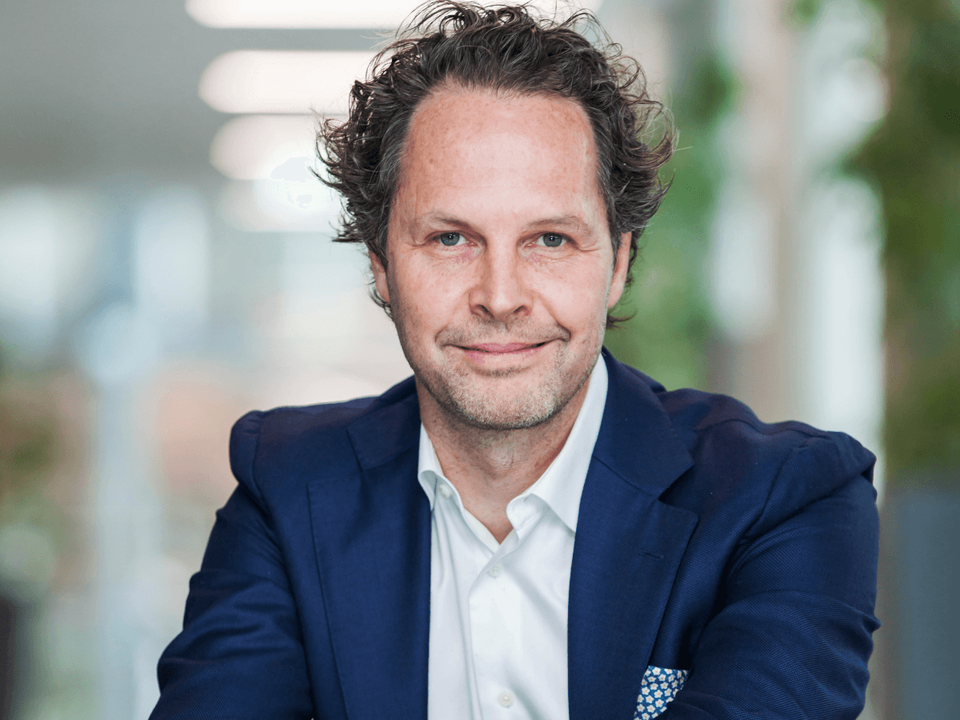
For Xander Lub, Professor of Organisations in Digital Transition, that is where the essence lies. Where others look at systems, he looks at behaviour. Where the focus is often on tools, he places it on people. And it is exactly that which makes his analysis relevant for sectors such as the meeting industry, where technology is becoming increasingly important, but where the core remains fundamentally human.
How do you define digital transition, and where does the concept most often go wrong?
“We keep making it too small. Many organisations reduce digital transition to a kind of upgrade: new software, better systems, perhaps some automation. But that is only the surface.”
“Digital transition is about a fundamental restructuring of your organisation. It touches everything: how you make decisions, how you collaborate, how teams are organised and even what leadership looks like.”
“What you see is that organisations believe they are done once the technology is in place, while the real work only begins then. Then you have to adapt processes, bring people along, change structures. And that is a far more complex and lengthy process than implementing a system.”
Why is this change so profound and so difficult to keep pace with?
“Because technology now sets the direction rather than merely supporting it. In the past we used technology to make existing processes more efficient; now technology is forcing us to redesign those processes entirely. That means organisations must keep adapting continuously, and speed plays an enormous role in that.”
‘We keep reducing digital transition to an upgrade, but that is only the surface’
“In a project focused on AI skills, we saw roles such as AI expert emerge within a matter of months and then disappear again as a separate function. What was once a specialist position suddenly becomes a basic skill required of many more people.”
“That means you can no longer rely on fixed structures or long-term plans as we were accustomed to. As an organisation, you have to learn to operate in a constant state of change.”
How does this manifest within organisations, and what does it mean for the conference industry?
“Within organisations you often see that different layers are not moving in sync. Senior leadership spots developments and formulates a strategy: ‘we need to do something with digitalisation or AI’. That gets translated by middle management into concrete plans, but on the work floor it often feels like something being imposed from above.”
“In the conference and events industry you see this even more clearly, because multiple parties collaborate within a single chain. Think of venues, technical suppliers, stand builders, marketing agencies – all specialists, each managing their own part.”
“Digital transition demands integration of that chain, but as long as everyone keeps working from their own silo, integration remains limited. The result is fragmentation instead of coherence.”
What is missing in how organisations address this?
“The human component is structurally underestimated. The thinking tends to focus on solutions: we buy a system and we are set. But people have to work differently, collaborate differently and sometimes even rethink their role entirely.”
The limits of technology
Technology can do a great deal: streamline processes, better understand delegates, personalise experiences. What it cannot do is replace the human contact that makes an conference an conference. That boundary, says Lub, is precisely where organisations need to stay alert.
“In addition, too little is invested in skills, when in fact that is the key. Especially in sectors like the conference industry, where a great deal of knowledge is tacit and resides in people. If you do not bring those people along, you create a situation where the technology is present but never fully utilised.”
You mentioned the chain within the conference industry. How is it changing in practice?
“The biggest change is that the chain is becoming increasingly integrated. Where you once had separate links – one party for technology, one for venues, one for marketing – technology is now making it possible to connect those processes.”
“That means you start thinking much more in terms of the total customer journey. Not: who handles which part? But: how does a delegate or client experience the entire process? That requires sharing information and aligning processes — which is precisely where things still tend to break down, because parties are accustomed to optimising their own piece.”
What does this mean for how work is organised within the industry?
“That work becomes less fragmented and more cohesive. You see organisations increasingly organising around client interactions rather than functions. Teams are becoming more flexible and need to collaborate more effectively across boundaries.”
‘The more digital our world becomes, the more important physical encounters become’
“At the same time, technology is taking over part of the work or supporting it. Think of marketing analyses, audience targeting or the preparation of proposals. These are processes that can keep becoming smarter and faster.”
“What this creates is space. Space for creativity, for concept development and for building experiences. And that is precisely where the conference industry can distinguish itself.”
Is that also where the enduring value of conferences lies?
“Yes, and there is an interesting paradox here: the more digital our world becomes, the more important physical encounter becomes. During the pandemic we saw how much is possible online, but also what is missing – namely, meeting people in person.”
“A conference is not only about knowledge transfer. If that were all it offered, you could just as well do it digitally. It is about the encounter, the conversation, the chance interactions you cannot plan for. That is where value is created that technology cannot replace.”
“I still remember clearly how that first conference after the pandemic felt: the relief was written on everyone’s face.”
What would you concretely advise organisations?
“Go back to the fundamentals of your process. Look not only at what you do, but also at why you do it and how it can be done better. Think from the perspective of the customer journey rather than your own role.”
“Collaboration is essential. Especially in this sector, there is much to be gained by sharing knowledge and working together, for example in developing skills. And invest in people. Because ultimately they are the ones who must carry the change.”
How do you see the future of the conference industry within this transition?
“I believe the industry will remain more relevant than ever, but its form will change. Many operational tasks will become more efficient or disappear entirely. Processes will be structured more intelligently and supported by technology.”
“But the core – bringing people together – remains. And it will grow in importance. Precisely because we are working increasingly digitally, the need for physical encounter is increasing. For real conversations, for context, for connection.”
“The organisations that succeed are those that deploy technology intelligently while keeping the human dimension central. Those that understand that efficiency matters, but that real value is created in the interaction between people.”
Xander Lub studied psychology at Leiden University and obtained his doctorate in work and organisational psychology at Tilburg University.
He began his academic career in New Zealand at the University of Auckland, before going on to work at three universities of applied sciences focused on the hospitality sector, including Hotelschool The Hague, Saxion and Breda University of Applied Sciences.
After some twenty years of teaching and research in the hospitality and tourism industry, he broadened his field. Since January 2021, he has been a professor at Utrecht University of Applied Sciences, where he leads the research group Organisations in Digital Transition. His research focuses not on technology itself, but on its impact on people and organisations: how to change successfully, which skills are needed to do so, and how to keep work humane in an increasingly digital world.
Deel dit bericht
Reacties
Er zijn nog geen reacties.
Plaats een reactie
Je moet ingelogd zijn om een reactie te plaatsen.