
Conference Matters international
‘A conference can be a confronting mirror’
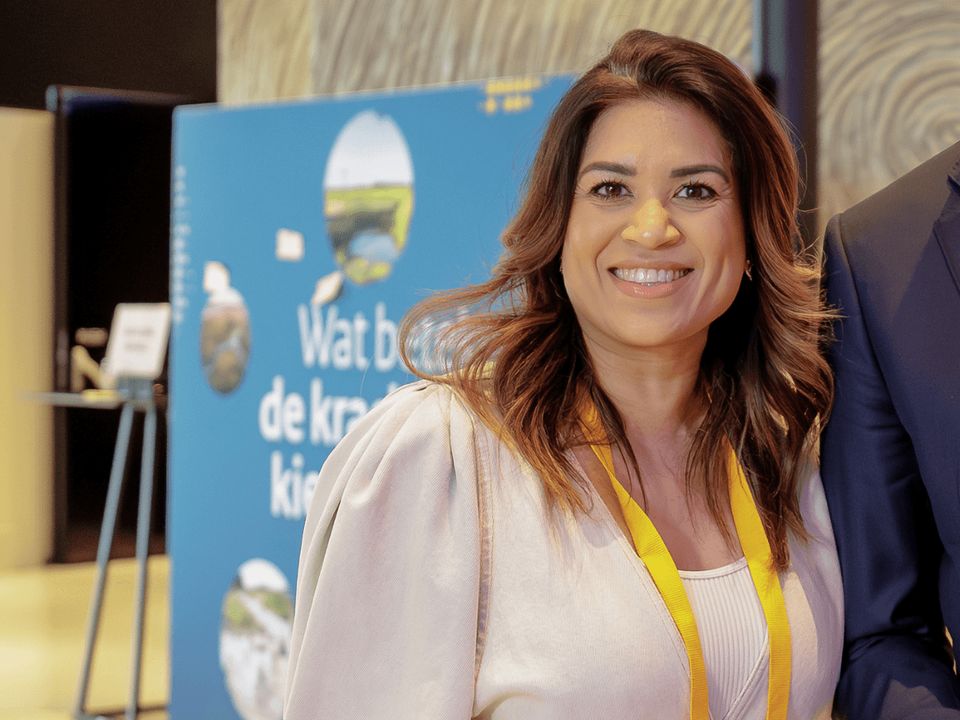
She has been in the field for well over fifteen years. Years of substantive experience, always open to new developments and consistently committed to her own professional growth.
This combination means that Anita Nirandjan, project manager of the yearly Dag van de Ruimtelijke Ordening [Spatial Planning Day] at the Dutch Ministry of Housing and Spatial Planning, is well placed to take an informed look at the organisation of meetings and conferences. And in her view, it all begins with gaining a clear understanding of the objective.
“Our overall objective is often the same: exchanging knowledge. What’s more interesting is the specific goal. You need to think carefully about that, discuss it with others and formulate it as clearly as possible. Once you achieve that, you can make the right content choices.”
Budget is a determining factor, but for Nirandjan a sharply formulated goal is the key. “When the objective is clear, you can better determine whether to opt for a conference, or perhaps a festival. A clearly defined goal makes the programme directly more purposeful. If a goal simply cannot be achieved through a live event, then you shouldn’t pursue one.”
A special moment
Working for a ministry adds an extra dimension. Part of the work is shaped by politics. New elections bring new ministers. Hugo de Jonge of the CDA was succeeded by Mona Keijzer of the BBB. That shift brings different priorities within the ministry.
When Nirandjan began this role at the ministry five years ago, the initial phase of a new National Spatial Strategy was just getting underway. This long-term vision for the Netherlands made it a substantively fascinating process. “A key part was presenting each successive phase of the Strategy. This year - hopefully in the autumn - the National Spatial Strategy will be completed, and we will be able to deliver it properly. Even though I’m not involved in its content, it will be a special moment for me too.”
Concrete outcomes
Through the many meetings and conferences she has organised over the years, Nirandjan has a clear sense of when she has achieved her goals: when she has made a concrete impact on participants.
“I always try to think from their perspective,” she says. “What matters most to me is giving the hundred, or sometimes five hundred, people who attend an event something that helps them take a step forward in their work. A stronger network, or solutions to a concrete problem they’re facing. The content of the conference must connect with their needs, not the other way around.”
The way to achieve that is, according to Nirandjan, as straightforward as it is challenging. “The key is getting the right people to your event,” she says. “That’s where stakeholder management becomes essential. Unfortunately, it often receives too little attention. If you don’t know who is coming, you risk making the wrong content choices entirely.”
Critical participants
Over the years, she has experienced that herself. At the same time, the less successful events proved equally instructive. “What’s wonderful about an event is that the quality of a workshop is always reflected in what participants take away and feed back to the organisation. If things aren’t in order within your team and you think you can casually throw together a slideshow, that will immediately show in the responses. Many people react badly to that. It’s simply not acceptable anymore.”
‘In plenary sessions, different target audiences need to be reached both in their minds and in their hearts’
In that sense, a conference can be a confronting mirror. She has experienced this over the years – including in a positive way. Nirandjan welcomes a critical attitude from participants. Government thinking can sometimes suffer from an ‘ivory tower’ perspective. “Correction is very welcome. Critical participants make us better.”
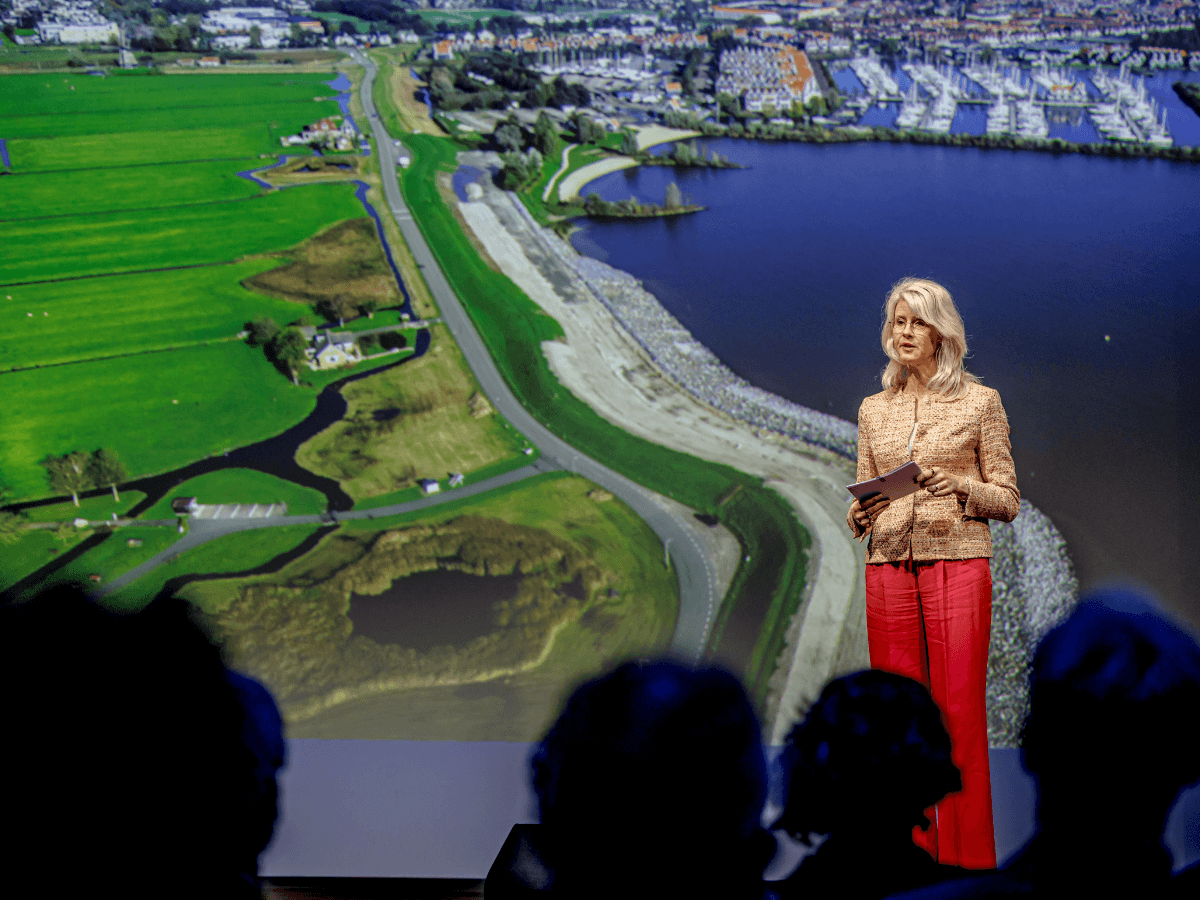
This is especially true for substantive workshops. Plenary sessions are more challenging, because they lack a focus on a single target audience. “What needs to happen there – as I always put it – is a little magic. A strong speaker can provide that. There must be an element of symbolism on the stage. Different target audiences need to be reached both in their minds and in their hearts. They all need to feel: this is about us; this is genuinely exciting.”
A long-term relationship
Nirandjan cannot always bring in a producer, but when it comes to creating that magic, it can make all the difference. She prefers to build long-term relationships with producers who understand her vision at a fundamental level. “I need someone who can get inside my head. Once that works, you can start playing around with other elements. In the end, mutual trust always pays off in the long run.”
“It may sound strange, but I want producers to feel like direct colleagues. People who are only in it for the money – I try to avoid them. Sometimes I encounter agencies and think: seriously, do you want an arm and a leg for this? That partnership ends immediately.”
Talking until blue in the face
She has built a long and rewarding collaboration with XSAGA Congresses. Their joint production of a conference in 2023 was even awarded the Golden Giraffe Award in the category Congresses and Knowledge Events.
‘It may sound strange, but I want producers to feel like direct colleagues’
“I had to convince colleagues to work with XSAGA. They were thinking in terms of a screen, a projector and a sandwich – not so much the translation of a particular theme or symbolism during the congress. I had to talk until I was blue in the face, but in the end everyone was very happy with the choice.”
“Personally, I was delighted with the connection we managed to create. I said: ‘I want to move people. They should sit in that room and be filled with wonder, surprised by the magic created on stage. And carry that feeling with them for the rest of the day.’ And that’s exactly what we achieved that day.”
Spatial Planning Day
At the time, the knowledge event was still called the National Environment Vision Conference (NOVI). It was minister Hugo de Jonge who advocated for the new name: Spatial Planning Day. A good choice, Nirandjan believes. Clearer, and a name that does justice to the many subjects that fall under spatial planning. “Cultural Heritage and Defense are part of it too, for instance. It’s precisely on a day like this that collaborations with other governments and our partners come to the fore.”
She experiences the collaboration with XSAGA Congresses as something special. With every event, the aim is to learn from the past while giving it a new twist. That way it’s always different, with room for other agencies too.
“I believe in communicating openly and directly,” she says. “That’s how you challenge and inspire each other. I firmly believe in that dynamic. With an open mindset, you as a client can allow a producer to excel while developing yourself at the same time.”
Deel dit bericht
Reacties
Er zijn nog geen reacties.
Plaats een reactie
Je moet ingelogd zijn om een reactie te plaatsen.